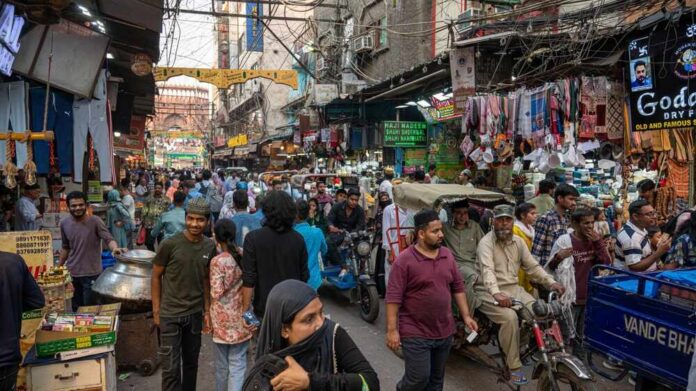
Viral Video FURY: Two Sets of Rules Divide America
A viral street-vendor crackdown clip is rekindling a familiar American frustration: law-abiding small businesses feel squeezed while rule-breakers keep operating like nothing happened.
Story Snapshot
- Separate viral incidents are driving a wider “two sets of rules” debate over street vending, enforcement, and fairness.
- In India, a YouTube crew confronted Muslim vendors at a major Hindu festival and framed it as “food jihad,” despite no verified evidence of poisoning.
- Reports say local police in the Indian case had no formal complaint on file as the videos spread and sparked outrage.
- The episode shows how online vigilantism can mix real consumer-safety concerns with identity-based targeting.
A viral “two rules” moment fuels public anger
New York Post reporting on a viral video says packed food vendors and legal businesses are clashing over what they see as unequal enforcement—one set of rules for permitted operators and another for vendors who appear to operate outside normal licensing and health requirements. The online reaction has been intense because it taps into a basic expectation: the government should apply the law evenly, especially when public health and livelihoods are involved.
That frustration is not inherently partisan; it is about credibility. When enforcement looks selective, the public stops trusting the system, and legitimate operators feel punished for following rules. The research provided does not include official documents detailing the specific jurisdictional policies in the viral U.S. case, so the fairest conclusion is limited: the controversy is being driven by perception of inconsistency, amplified by social media, and reinforced by real-world competition over sidewalks, markets, and customers.
Viral video shows packed food vendors as legal businesses fume over 'two sets of rules' https://t.co/qkOXdYASnn pic.twitter.com/KrMVUyfw8D
— New York Post Metro (@nypmetro) February 16, 2026
India’s Medaram Jatara dispute shows how “safety” can turn into harassment
In Telangana, India, multiple outlets describe a separate viral episode at the massive Medaram Jatara tribal festival. Videos uploaded by the Telugu YouTube channel Tejaswi News show the channel’s anchor confronting Muslim street vendors selling khova (kova) buns, questioning the low price, demanding ID, and pressuring at least one vendor to eat a bun on camera to “prove” it was safe. The confrontations used the phrase “food jihad,” a religiously charged allegation.
The available reporting describes claims that festival-goers fell ill after eating buns, but the research also indicates no food-safety experts were cited and the illness claims were not supported with publicly presented evidence. Mulugu district police reportedly had no formal complaint filed at the time of reporting. That gap matters because it separates legitimate health enforcement—inspections, lab tests, citations—from online intimidation. When citizens turn “consumer protection” into public shaming without verified facts, due process disappears.
Vigilantism vs. rule-of-law enforcement
The India case also illustrates a familiar pattern: crowds, cameras, and a provocative narrative create pressure that a lone vendor cannot realistically resist. Reporting describes how vendors from Kurnool, Andhra Pradesh, returned home amid backlash and how villagers later rallied to support them financially. Political leaders across parties reportedly condemned the harassment and urged communal harmony, while at least one Hindu nationalist organization defended the YouTubers and attacked critics as a disloyal “Tukde Tukde gang.”
From a rule-of-law perspective, the key issue is not whether street food should be regulated—it should be, for everyone’s safety—but who gets to enforce it and how. Food safety is handled through licensing, sanitation standards, inspections, and penalties applied evenly. Viral “gotcha” interrogations can create the illusion of accountability while bypassing the legal mechanisms that protect the innocent and punish the guilty. In the research provided, no official finding confirming adulteration was cited.
What these viral clashes reveal about fairness and public trust
Taken together, the U.S. “two sets of rules” debate and the Indian “food jihad” videos highlight the same pressure point: when the government fails to deliver transparent, equal enforcement, the vacuum gets filled by outrage—sometimes constructive, sometimes reckless. In America, that outrage often shows up as anger at bureaucracy, selective enforcement, and policies that appear to reward bad behavior while penalizing compliance. Rebuilding trust requires clear rules, consistent action, and visible results.
Based on the research here, one conclusion is solid: viral content is shaping public expectations faster than institutions respond. That is why officials must communicate standards, publish enforcement data where appropriate, and treat similar violations similarly—whether the business is a brick-and-mortar shop, a permitted cart, or an unlicensed pop-up. When enforcement is consistent, communities do not need online mobs to “police” the public square, and legitimate operators are less likely to feel abandoned.
Sources:
Telugu YouTube channel targets Muslim vendors claiming ‘food jihad’
Viral video sparks outrage over harassment of Muslim vendor at tribal festival
NDA allies back Muslim vendor; blunt right-wing ‘food jihad’ campaign in AP
Nahi mere paas canva hai: Street vendor savage reply to woman breaks the internet; watch viral video
Video Shows Rat Jumping Out Of Golgappa Mixture, Sparks Hygiene Alarm: “Please Say It’s AI”