

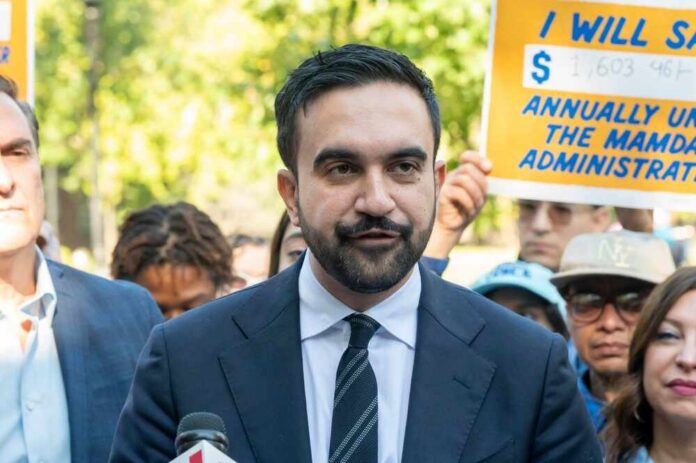
A viral claim that New York City’s new socialist mayor is about to hand child welfare power to an activist who compared CPS to “genocide” is colliding with a basic problem: the mainstream record doesn’t back it up.
Quick Take
- No provided mainstream or official sources confirm that Mayor Zohran Mamdani is considering a CPS “genocide” activist to run a child welfare agency.
- The documented focus of Mamdani’s early staffing and policy rollout is universal child care expansion, including new 2-K seats and revived 3-K growth.
- One early personnel controversy did surface in the public record, underscoring the importance of vetting city appointees.
- Conservatives should separate verified governance actions from viral outrage—especially when children and parental rights are involved.
What’s Verified vs. What’s Viral in the “CPS Genocide” Story
Multiple credible items in the provided research fail to confirm the central allegation that Mayor Zohran Mamdani is “eyeing” an activist who called Child Protective Services “genocide for Black People” to lead a child welfare agency. The available reporting and official city announcements instead describe staffing tied to child care and broader administration roles, with no matching references to CPS leadership or the specific rhetoric described in the claim.
That distinction matters because child welfare policy sits close to core constitutional and family concerns: parental rights, due process, and the power of the state over households. When a claim involves a radical framing of CPS, it deserves scrutiny—but scrutiny starts with confirmation. Based on the sources provided for verification, the record here is incomplete for the viral allegation, and readers should treat it as unproven absent supporting documentation.
Mamdani’s Documented Early Agenda: Child Care Expansion, Not CPS Overhaul
Publicly documented developments around Mamdani’s early weeks focus on expanding early childhood education access. Reporting and city materials describe plans for 2-K—care and early learning seats for two-year-olds—alongside renewed growth in 3-K, with a provider outreach process launched in early February 2026. The stated targets include scaling seats over 2026 and 2027, framed as a step toward universal child care.
That agenda is separate from child protective investigations, family court removals, and foster care placements—areas typically associated with CPS and child welfare agencies. The provided research includes a child welfare-focused outlet discussing leaders “weighing in” on early transition moves, but it still does not substantiate a specific CPS appointment tied to the inflammatory “genocide” quote. For voters tired of ideological experiments, the key point is what is actually in motion.
Who’s Actually Named in the Record: Appointments and Internal Vetting
The sources provided name officials involved in child care operations and appointments. City & State’s “who’s who” roundup identifies personnel such as an executive director for the Mayor’s Office of Child Care and an appointments director tasked with staffing city government. NYC’s official announcements list additional appointments across city roles, reflecting the broader machinery of governance rather than a single ideological flashpoint.
One controversy that is documented involves an appointee who resigned after past antisemitic posts drew scrutiny, followed by a replacement. That episode, while separate from CPS, highlights a reality conservatives have watched for years: appointment power determines policy direction, and weak vetting can quickly trigger public backlash and institutional instability. The best safeguard is transparent hiring, clear agency mandates, and measurable outcomes—not slogans.
Why This Still Matters to Conservatives: Family Authority and Government Power
Even when a viral claim can’t be verified, the underlying anxiety is understandable. Child welfare systems can remove children, mandate services, and shape family life through state force. That is exactly why conservatives demand high standards of evidence before accepting sensational stories—and high standards of governance once leaders take office. If a city ever elevated officials who view CPS as inherently illegitimate, it would raise serious due-process and accountability questions.
For now, the reliable paper trail in the provided research points to child care expansion and administrative staffing, not a confirmed CPS leadership pick tied to the “genocide” language. Readers should keep pressure on city hall for transparency while also resisting the modern media trap: outrage first, verification later. When children, families, and government authority intersect, accuracy is not optional—it’s the first line of defense.
Sources:
Who’s who in Zohran Mamdani’s administration
Mayor Mamdani Announces Additional Appointments Across Key City
NYC child welfare leaders weigh in on mayor-elect Mamdani’s early moves
Live updates: NYC Mayor Zohran Mamdani’s first 100 days in office
Zohran Mamdani sworn in as New York City mayor at historic subway station