

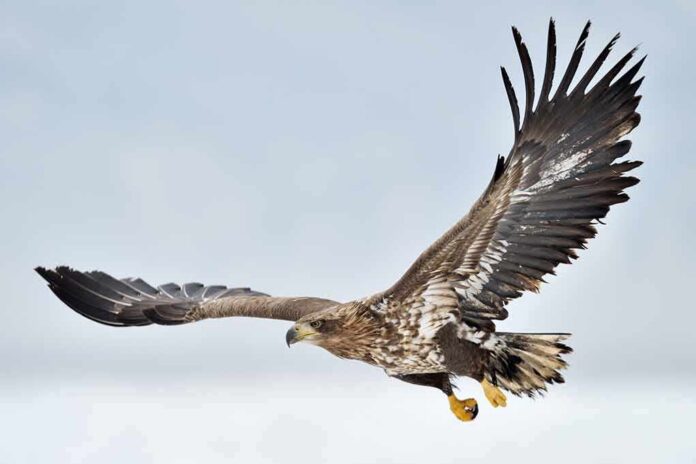
Animal activists say Topgolf’s towering nets are trapping birds, and they just moved the fight to court.
Story Highlights
- Attorney’s letter alleges birds are getting stuck in Topgolf netting and suffering harm
- Recent Long Island reports describe a hawk entangled at the Holtsville site
- State official notes only two recent complaints at that location so far
- Topgolf says it uses aviary-style nets and has a plan to free trapped birds safely
Activists Allege Cruelty After Repeated Bird Entanglements
Attorney Nora Marino sent a letter accusing Topgolf of allowing birds to become trapped in its high nets, causing suffering, injury, or death. The letter demands the company deploy trained wildlife rescuers with proper tools to free birds quickly. News reports say a hawk became stuck at Topgolf’s Holtsville site on Long Island last month, adding urgency to the claims. Activists argue any entanglement that harms a bird meets New York’s animal cruelty law threshold.
Local coverage indicates this was not a one-off scare. Reporters and rescuers have described more than one entanglement on Long Island in recent weeks. Earlier coverage outside New York cited at least one osprey death after getting caught in netting years ago, showing the concern predates the current flap. The current lawsuit talk, however, rests more on recent Long Island incidents than on a complete national count or database of cases to prove broad harm.
Evidence Gaps Challenge Sweeping Claims
Reporters quote broad claims that “thousands of birds” have suffered over many years. The available record does not supply a verified incident database, court exhibits, or a formal complaint to support that large number. Without filings, exhibits, or necropsy reports, the scale and exact causes remain unclear. The strongest facts now are the recent entanglements on Long Island and an earlier reported osprey fatality, rather than proof of a nationwide pattern with confirmed deaths.
New York’s Department of Environmental Conservation said it has not received complaints about protected birds in golf nets beyond two recent Holtsville cases. An agency official said the department is open to explore solutions for future trapped raptor scenarios at the site. That stance shows concern but also suggests the scope is still limited in official files. Topgolf said it is committed to the safety of guests, staff, and local wildlife, echoing that message to local media.
Topgolf’s Response and Technical Claims
Topgolf has told communities that its safety nets are similar to those used in bird aviaries at zoos. A company representative said there is a standard procedure to free birds safely if they get caught. In earlier local planning talks, a project manager countered that aviary nets are not the same as nets that birds can hit at speed, and said the harm question is not settled science. The company’s assurances and those concerns remain in tension today.
Topgolf has also indicated that most birds that hit the netting “bounce off and fly away,” and that the netting should not endanger migratory birds. These claims aim to show low risk and quick recovery for typical strikes. They also underline why formal evidence matters. If the risk is low, records from rescues, agencies, and any necropsies would help settle doubts. For now, the public sees dueling claims backed by limited hard data.
What Matters for Families, Property Rights, and Common Sense
Local families want safe recreation, fair business rules, and honest data. This dispute shows why clear records beat loud headlines. When activists cite cruelty laws, they should bring filed complaints, response logs, and expert reports. When companies promise safety, they should show incident logs, rescue times, and outcomes. State agencies should publish summaries so the public learns what really happened without guesswork or grandstanding.
Practical fixes can respect wildlife and property rights. Simple steps may include faster lift access, trained rescuers on call, and design tweaks where birds fly often. Agencies can map hotspots during migration and set basic response standards. None of that demands heavy-handed rules or culture-war theatrics. It asks for proof, quick action when a bird is in trouble, and straight talk from every side. That is the common-sense path forward.
What to Watch Next
Watch for an actual lawsuit filing with named claims and exhibits. Look for any incident logs from New York’s Department of Environmental Conservation or local responders. Track whether Topgolf releases rescue procedures, response times, or design changes at the Holtsville site. These documents will show whether we face a rare nuisance, a design flaw at a few sites, or a wider risk that needs firm, targeted fixes grounded in facts, not hype.
If better records confirm a small number of cases, local tweaks should handle it fast. If evidence shows repeat harm, then targeted engineering changes can follow. Either way, the goal is the same: protect wildlife without punishing lawful business or fun family outings. That balance is a core conservative value. It honors private enterprise, trusts people with clear facts, and resists sweeping mandates that do more harm than good.
Sources:
us.headtopics.com, nypost.com, offthepress.com, law360.com, internewscast.com