

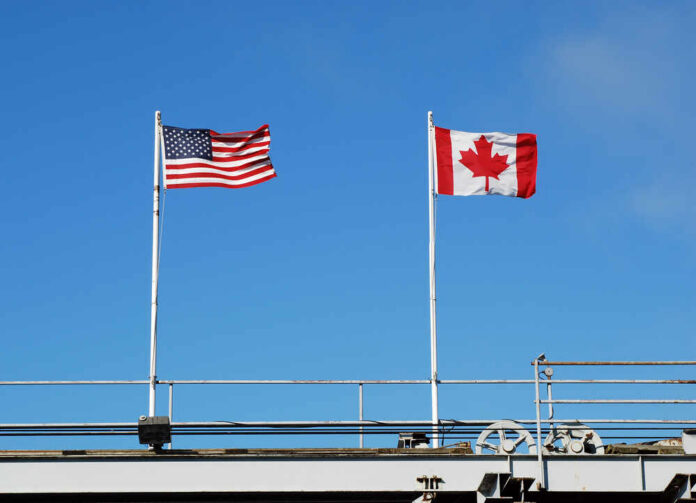
Long before today’s tight U.S.–Canada alliance, American planners quietly wrote a detailed blueprint to gas Halifax, seize Winnipeg, and hold Canada hostage in a war with the British Empire.
Story Snapshot
- War Plan Red was a real, official U.S. plan in the 1930s to invade Canada if war broke out with Britain.
- The plan called for capturing Halifax, even using poison gas, plus strikes on major Canadian cities and industry.
- Canadian officers answered with Defence Scheme No. 1, a plan to raid U.S. border towns, then retreat.
- Historians say these plans were “contingency” war games, yet they expose how elites think about borders and power.
How America Planned to Hit Canada First
In the uneasy years between World War I and World War II, U.S. military leaders drew up what they called War Plan Red, a secret strategy for a possible war with the British Empire. In that scenario, Canada, code-named “Crimson,” was the forward base for British troops and ships, so the United States aimed to knock Canada out fast. The plan’s authors wanted to use America’s larger manpower and industry to overrun Canadian territory and then force Britain to accept peace on U.S. terms.
War Plan Red did not start with a direct attack on Britain’s powerful navy; it started with Canada. U.S. forces, labeled “Blue,” would race to capture key ports, rail lines, and power plants across Canadian soil. Military planners believed that cutting Canadian industry and transport would “strangle” British war production. They mapped out roads, bridges, and rail hubs, and even ran large war games with tens of thousands of troops to practice the moves on paper and in the field.
Poison Gas for Halifax and a Drive on Winnipeg
One of the most chilling parts of War Plan Red was the focus on Halifax, the main Atlantic port for British ships. The plan said Halifax was so important that the United States should consider using poison gas to secure it during an attack. Taking Halifax would let American forces cut undersea cables and break Canada’s link to Britain. The plan also called for seizing Niagara Falls to shut down Canadian electricity, and hitting cities like Montreal, Toronto, Winnipeg, and Vancouver to grab railroads and factories.
The level of detail went far beyond a simple “what if.” Planners listed specific roads and bridges for different U.S. units and even proposed building new border air bases to strike Canadian airfields. At the same time, they counted how many men Britain could move into Canada and how quickly, then built the invasion timetable around those numbers. One historian noted that, if fully carried out, War Plan Red could have ended Canadian sovereignty and left Canada as a bargaining chip against Britain.
Canada’s Defence Scheme No. 1: Raid America, Then Run
Canadian officers did not sit idle while American planners drew up War Plan Red. Canada developed its own plan called Defence Scheme No. 1
Both plans now sound absurd, given the deep friendship our countries share, but they were taken seriously at the time. Canadian and American war and naval departments in the 1920s treated these schemes as part of routine planning, gaming out wars with many possible foes. Later studies by military historians argue that color plans like War Plan Red were “contingency plans,” not proof that war was likely, but they still required staff to imagine bombing neighbors and using gas on civilian ports.
From Secret Plans to Today’s Border Politics
War Plan Red was approved in 1930 and stayed on the books through much of that decade; it was finally withdrawn in 1939 as planners shifted toward new “Rainbow” plans for World War II. The documents remained secret until they were declassified in 1974, when the public finally saw how far U.S. and Canadian officers had gone in planning to fight each other. By then, America and Canada had fought side by side against Nazi Germany and Imperial Japan, and most people treated the old plans as an odd Cold War–era curiosity.
Today, the United States and Canada are close partners linked by a 5,525‑mile border and shared values. Our militaries train together, guard the continent, and coordinate on issues from trade to energy security. Still, these old invasion plans offer a warning for modern readers who care about national sovereignty and border control. They show that even friendly elites will quietly plan to move troops, control infrastructure, and redraw maps when they think power or resources are at stake. That makes today’s debates over open borders, globalism, and defense spending feel less abstract and more real.
Sources:
19fortyfive.com, themorningnews.org, youtube.com, reddit.com, publications.gc.ca, cgai.ca, history.army.mil