
Two foreign National Institutes of Health researchers allegedly walked off a commercial flight with more than 100 hidden virus vials from a monkeypox outbreak zone before the public heard a word about it for five months.
Story Snapshot
- Two foreign nationals working at a National Institutes of Health high-security lab are charged with conspiring to smuggle monkeypox virus into the United States and lying to federal agents.
- The alleged smuggling happened on January 25, 2026, but the criminal complaint was not publicly announced until June 2, 2026, fueling questions about who knew what and when.
- Prosecutors say the researchers carried 113 vials, including multiple vials of deactivated monkeypox virus, on a packed commercial flight from an active outbreak in the Republic of Congo.
- The case highlights long‑running Republican concerns about risky virus research, weak federal oversight, and a culture of secrecy inside the National Institutes of Health.
Federal Charges Against NIH Researchers Over Hidden Virus Vials
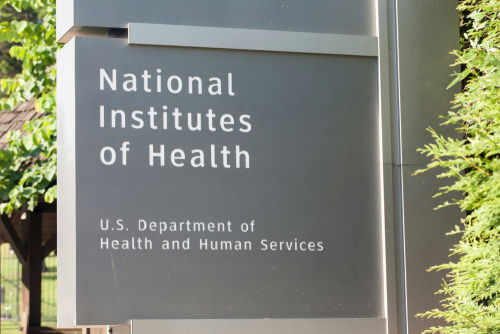
According to the United States Attorney’s Office for the Eastern District of Michigan, Dutch citizen Vincent Munster and Cameroonian citizen Claude Kwe, both researchers with the National Institutes of Health at the Rocky Mountain Laboratory in Hamilton, Montana, were charged in a criminal complaint with conspiracy to smuggle monkeypox into the United States and making false statements to federal law enforcement.[1] Prosecutors say they work on “emerging viral pathogens” at a Biosafety Level 4 lab, the highest security category for dangerous human pathogens.[1][2]
The Justice Department release says Munster and Kwe arrived at Detroit Metropolitan Airport’s McNamara Terminal on January 25, 2026, after travel from Brazzaville in the Republic of Congo, where a monkeypox outbreak was underway.[1][2] Customs and Border Protection officers noticed the pair carrying a large black plastic case and questioned them about its contents.[1][2] The researchers allegedly told officers the case held diagnostics and testing equipment, an answer prosecutors now say was false.[1][2]
What Investigators Say They Found Inside the Black Case
Subsequent investigation by Customs and Border Protection officers and Federal Bureau of Investigation agents allegedly revealed that the black case actually contained 113 vials packed in Styrofoam coolers rather than just equipment.[1][2] As of the date of the complaint, the Federal Bureau of Investigation had tested 20 of those vials: seventeen reportedly contained deactivated monkeypox virus, one contained the chickenpox virus, and two contained only human DNA.[1][2] Prosecutors emphasize that the issue is the unlawful smuggling and deception, not just the deactivated status.
The United States Attorney publicly stressed the gravity of the alleged conduct, stating that these National Institutes of Health experts “apparently broke our laws by smuggling viral pathogens on a packed commercial airplane from an outbreak in the Republic of Congo.”[1][2] Federal officials underscored that no researcher’s credentials or professional status place them above the law, signaling a tougher line on government scientists who treat security rules as optional.[2] If convicted, Munster and Kwe each face a maximum sentence of five years in prison under the charged offenses.[1][2]
The Five‑Month Gap and Transparency Concerns
Federal prosecutors announced the charges and unsealed the criminal complaint on June 2, 2026, more than four months after the January 25 airport encounter, meaning the public only learned of the alleged smuggling incident long after the fact.[1][3] The Justice Department materials show the complaint was unsealed by prosecutors in Detroit and investigated by the Federal Bureau of Investigation, Customs and Border Protection, and the Department of Health and Human Services Office of Inspector General.[1] Nothing in those documents explains why the case remained sealed or undisclosed during that period.[1][3]
Public records confirm that Munster and Kwe were working as National Institutes of Health researchers at the time, tying the incident directly to a federal health agency that already faces scrutiny over risky monkeypox and other virus experiments.[1][3] However, the available documents do not state when National Institutes of Health leadership first learned of the alleged smuggling or what internal steps they took in the months before the June announcement.[1][3] That silence, combined with the long gap between the airport stop and public disclosure, reinforces a familiar pattern where health bureaucracies appear more focused on managing optics than informing the taxpayers who fund them.
Why Conservatives See a Pattern With Risky Virus Research
This case lands against a broader backdrop of congressional criticism that the National Institutes of Health has allowed taxpayer‑funded, high‑risk monkeypox research to proceed with inadequate oversight and transparency. A report from Republicans on the House Energy and Commerce Committee describes “risky” monkeypox virus experiments at a National Institute of Allergy and Infectious Diseases lab and faults the National Institutes of Health for misconduct and weak internal controls that could jeopardize public health security. For many conservatives, the new smuggling charges appear less like an isolated scandal and more like another symptom of a broken culture inside federal science agencies.
SHOCKING:
Two mad scientists at Fauci’s most dangerous biolab in the country just got arrested for trying to smuggle monkeypox viruses from Africa onto US soil.
This is not a conspiracy theory.
It’s real.
And these monkeypox samples—and possibly other viruses—were en route to… pic.twitter.com/z8dfpvkfxu
— White Coat Waste (@WhiteCoatWaste) June 3, 2026
Conservative voters who remember bureaucratic evasions during the COVID‑19 and earlier monkeypox episodes see familiar warning signs: dangerous pathogens, international travel from outbreak zones, government scientists, and a federal apparatus slow to share details until forced.[3] Health authorities describe monkeypox as a zoonotic orthopoxvirus related to smallpox that can cause painful rashes, fever, and other serious illness, even if mortality is lower than historic smallpox. When such viruses are handled in secret, outside declared channels, trust erodes further, strengthening calls for tighter controls, real accountability, and an end to opaque, high‑risk experiments conducted on the public’s dime.
Sources:
[1] Web – NIH Knew Researchers Allegedly Smuggled Monkeypox Into the US, but Sat …
[2] Web – Eastern District of Michigan | Feds charge foreign nationals working …
[3] YouTube – FBI: NIH scientists accused of smuggling monkeypox into …