
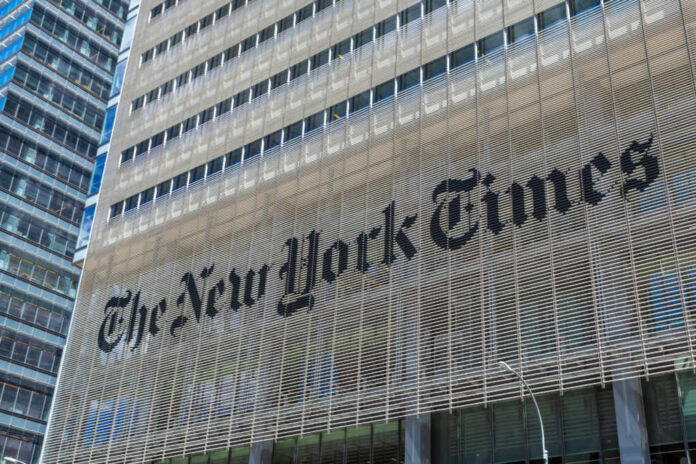
The White House blasted a New York Times claim that Susie Wiles told Vice President JD Vance to “take a break from social media,” calling it “complete fake news” and asserting the conversation never happened [2].
Story Highlights
- White House Communications Director Steven Cheung issued a categorical, on-record denial that any such conversation occurred [2].
- The disputed New York Times allegation specifically named Susie Wiles and JD Vance, making the claim testable but currently uncorroborated in available records [2][3].
- Cheung said the administration denied the claim to the New York Times, which allegedly declined to print their quote [2].
- Secondary coverage amplifies the clash while leaving the underlying sourcing and documentation unclear [1][3].
White House Denies Reported Advice to Curb Vance’s Social Media
White House Communications Director Steven Cheung publicly rejected a New York Times report alleging that White House Chief of Staff Susie Wiles and senior aides urged Vice President JD Vance to reduce his social media activity. Cheung stated, “This isn’t true … Complete fake news. This supposed ‘conversation’ never happened,” issuing a direct refutation of the specific interaction described by the paper [2]. The denial targets the claim’s core factual premise, not merely its framing, raising the evidentiary bar for the allegation until corroboration emerges [2].
Secondary outlets summarizing the dispute report the same categorical language from Cheung, reflecting a consistent White House posture. Times Now News and Townhall both note the administration’s stance that the conversation did not occur and that the White House had already communicated that denial to the New York Times, which allegedly did not publish the quote [2][3]. MEAWW likewise highlights the “fake news” framing, underscoring how quickly the clash migrated from substance to credibility and sourcing questions [1].
Specific Claim Versus Thin Public Evidence
The contested New York Times claim, as summarized by other outlets, is precise: it identifies Susie Wiles, JD Vance, and the advice to “take a break from social media” [2]. Precision makes the claim testable, yet the present public record lacks primary-source confirmation such as emails, calendars, transcripts, or on-the-record statements from Wiles herself. The White House denial is unequivocal, directly contradicting the alleged exchange and leaving the charge unsupported in the material currently accessible to the public [2][3].
Because the available reporting relies on summaries of the New York Times article rather than the article or its sourcing structure, key verification details remain unclear. The number of sources, their proximity to the alleged conversation, and whether editors sought corroboration are not visible in the existing coverage [2][3]. That evidentiary gap matters: conservative readers should expect either named confirmation or documentary records before accepting a claim about high-level West Wing management guidance, especially when the principals dispute it on the record [2][3].
Media Accountability and Standards that Respect Voters
Transparency about sourcing and fair inclusion of denials are basic safeguards for public trust. Cheung said the White House provided a denial to the New York Times that was not printed as a quote, an assertion that, if accurate, raises a process concern about balance and completeness in high-stakes political coverage [2]. Responsible outlets typically present the administration’s on-record response alongside contested claims so readers can judge credibility without speculation or partisan filtering [2][3].
For a nation weary of agenda-driven narratives, the path forward is straightforward: show the receipts. If the New York Times stands by the claim, the paper can clarify its sourcing method and whether multiple independent insiders corroborated the same conversation. If no such corroboration exists, or if key details cannot be verified, then the categorical denial holds greater weight for readers who demand evidence before accepting stories that could undercut a vice president aligned with constitutional priorities and limited government principles [2][3].
Sources:
[1] Web – White House Calls NYT Report on Vance Social Media Advice ‘Complete …
[2] Web – ‘Complete Fake News’: White House Fires Back at JD Vance Asked …
[3] Web – Trump White House blasts NYT report on JD Vance as ‘fake news …