
A sweeping World Cup security clampdown in South Florida is rolling out with high-tech surveillance, drone shoot-down powers, and unclear immigration enforcement — raising real questions about how far the federal government should reach, even under a law-and-order administration.
Story Snapshot
- Federal Bureau of Investigation (FBI) Miami is leading a multi-agency World Cup security surge built on real-time intelligence sharing and heavy federal coordination.
- Temporary no-fly zones and aggressive anti-drone powers around Hard Rock Stadium and Bayfront Park carry stiff fines and possible jail time for violators.
- Officials promise new security zones to avoid a repeat of the 2024 Copa America crowd breach, but have not released detailed plans for public scrutiny.
- Unanswered questions about Immigration and Customs Enforcement (ICE) operations at matches fuel concern over how security powers might be used.
FBI touts ‘strong’ security as interagency machine moves into place
Federal Bureau of Investigation leaders in Miami say the security plan for the 2026 FIFA World Cup in South Florida is “strong” and already in motion, anchored by real-time intelligence sharing across federal, state, and local agencies.[1][3] Officials briefed media at the bureau’s Miramar office, describing a layered operation around Hard Rock Stadium and Miami’s Bayfront Park fan festival, with federal, city, and county law enforcement plugged into the same information stream to spot threats quickly and coordinate responses.[1][2]
City of Miami Police Chief Manny Morales said his department has been preparing for more than a year, stressing that planning has been “in the works for months” to handle the surge of visitors and heightened risk that comes with hosting seven World Cup matches.[1][2] FBI Deputy Director Andrew Bailey framed the effort as preventive, noting there are currently no known credible threats to the matches, while insisting that every large event carries risk and that planning and partnerships aim to keep those risks in check.[1][2]
Drone bans, flight restrictions, and the new federal perimeter in the sky
World Cup security in South Florida puts unauthorized drones at the top of the threat board, with FBI officials vowing to “detect and neutralize” any drone that threatens matches or fan events.[1][4] The Federal Aviation Administration (FAA) is imposing temporary flight restrictions around Hard Rock Stadium and Bayfront Park, creating no-fly zones several miles wide and up to 3,000 feet high, backed by civil penalties, criminal fines that can reach $100,000, and up to a year in prison for violations.[2][4]
FBI Miami has trained a small cadre of local officers through its Counter-Unmanned Aircraft Systems program, and officials say a select group of law enforcement partners will have legal authority to intercept and seize drones that enter restricted airspace.[2] Media coverage and agency briefings repeatedly highlight these drone measures, meaning many citizens’ most visible encounter with the plan will be warnings, enforcement actions, and aircraft restrictions rather than the quieter intelligence and investigative work happening behind the scenes.[1][2][4]
Lessons from the Copa America fiasco and gaps in public transparency
Security planners openly point to the 2024 Copa America final in Miami Gardens, when unticketed fans scaled fences and breached barricades, as a key lesson shaping World Cup preparations.[1][2] Officials say new security zones and added perimeter layers around Hard Rock Stadium will prevent a repeat, and they warn people without tickets to stay away from the venue on match days to avoid crowd chaos, safety risks, and likely encounters with law enforcement checkpoints.[1][2]
Despite these assurances, the public has not been shown a written security plan, detailed stadium annexes, or incident-command charts that clarify who is in charge if something goes wrong.[1][2] Reporting relies almost entirely on government briefings rather than independent audits, red-team test results, or after-action reviews from similar events, leaving citizens to take officials at their word that coordination is effective and that past failures have been thoroughly fixed rather than just acknowledged.[1][2][4]
Immigration enforcement questions and the risk of mission creep
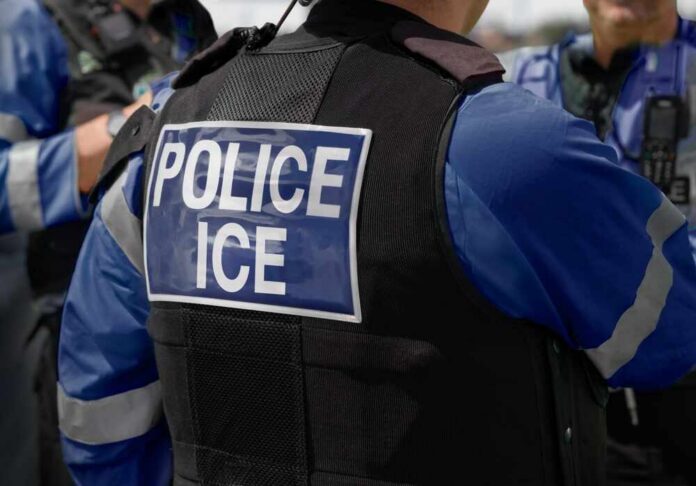
World Cup security messaging became more complicated when officials were pressed on whether Immigration and Customs Enforcement agents will be operating in and around the stadiums during matches.[2] FBI Deputy Director Andrew Bailey refused to give specifics, instead pointing reporters to President Donald Trump’s executive order creating a White House task force for the 2026 World Cup, which instructs the Department of Homeland Security and other agencies to coordinate planning but does not spell out exactly how immigration laws will be enforced at the games.[2]
Assistant Sheriff Charles and Assistant Sheriff Ruiz joined FBI leadership and local partners today in a roundtable hosted by FBI Miami to discuss security preparations for the upcoming World Cup. Together, they talked about nationwide coordination and the work happening here in… pic.twitter.com/hOQMPmR2C7
— Miami-Dade Sheriff’s Office (@MiamiDade_SO) May 30, 2026
Homeland Security Secretary Markwayne Mullin has said Immigration and Customs Enforcement officers will be present at World Cup games and did not rule out immigration arrests, contradicting earlier assurances from Miami host-committee leadership that federal immigration agents would not be working the stadium.[2] FIFA has declined calls to push for a pause on immigration enforcement, meaning fans could experience both heightened security and possible immigration actions, even as officials insist the core mission is the safety of matches, lawful visitors, and local communities.[2]
Sources:
[1] YouTube – FBI Miami Unveils Massive Security Plan Ahead of FIFA World Cup in …
[2] Web – Local law enforcement and FBI authorities detail security plan for …
[3] Web – FBI Miami: World Cup security preparations ready for South Florida …