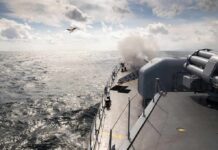

Iran-backed Houthi attacks are turning the Bab al-Mandeb lifeline into a danger zone for global shipping, pushing up costs and risk.
Story Highlights
- U.S. Central Command detailed repeated Houthi missile and drone strikes against ships in the Red Sea.
- Reuters data and reports show traffic fell and operators rerouted after fresh attacks near the strait.
- Yemen’s government and Pakistan reported deadly Houthi strikes on commercial crews.
- Analysts say disruption—not full closure—drives insurance hikes and higher prices for families.
What Is Happening in the Bab al-Mandeb Strait
U.S. Central Command reported that Iranian-backed Houthi forces launched waves of drones, cruise missiles, and an anti-ship ballistic missile into key shipping lanes on January 9. U.S. and partner forces intercepted most of the threats, but the pattern continued with more missiles prepared to fire and destroyed in later strikes, underscoring a sustained campaign against trade routes. These are not one-off scares. They are organized, repeated attacks aimed at a narrow choke point that moves much of the world’s energy and goods.
Reuters shipping data showed traffic through Bab al-Mandeb dropped right after attacks on nearby Saudi sites, as owners chose longer routes to avoid danger. Another Reuters report tied the campaign to a wider Iranian pressure strategy that leverages risk at chokepoints to gain leverage without closing seas outright. This is how costs climb fast. A few well-placed strikes spook insurers, raise war-risk premiums, and push carriers to burn more fuel around Africa.
Human Cost and Escalation Risks
Yemen’s internationally recognized government said a Houthi “double-tap” strike killed at least six crew, including Pakistanis and an Indonesian, and wounded others in Bab al-Mandeb. Pakistan separately reported its nationals among the dead after a ship attack claimed by the Houthis. These are direct hits on civilian mariners who keep store shelves stocked and energy moving. Each fatal strike increases pressure on shippers to leave, and on governments to act before more crews are harmed.
Central Command’s updates describe anti-ship ballistic missiles and armed drones staged for launch from Houthi areas and struck in self-defense before they could fire. That posture shows intent and capacity. It also raises miscalculation risks for navies and commercial ships that must pass this corridor. The more the group normalizes missile launches at sea lanes, the more global trade absorbs delay, insurance surcharges, and higher freight rates that land in family budgets.
Why This Matters for American Families
Chokepoints work like tollgates on the global supply chain. When militants add danger, insurers hike prices, and carriers pass costs to buyers. Analysts note the Houthis do not need to close the Red Sea to hurt the market; they only need to raise doubt so ships reroute and premiums spike. The Council on Foreign Relations explains that detours around the Horn of Africa add time and can add about one million dollars to a round trip, which filters into inflation. That means higher costs for fuel, food, and goods.
Some Houthi spokesmen claim they target only Saudi ships and that freedom of navigation is safe. But traffic dips, insurer warnings, and lethal strikes show the real-world effect reaches far beyond one flag. The United States Maritime Administration has warned that the southern Red Sea, Bab al-Mandeb, and Gulf of Aden pose the highest risk for hostile action against commercial vessels, signaling a live threat environment for any ship that enters. Words do not move cargo. Security and predictability do.
What the Trump Administration Is Doing—and What Comes Next
Under President Trump, U.S. forces have taken self-defense actions to destroy missiles ready to launch and to protect international shipping lanes. These strikes aim to keep the corridor open without dragging America into another long war. But partners must carry their load. Regional states benefit from the sea-lane. They should help patrol it and share intelligence. Washington can continue targeted self-defense, tighten sanctions on missile suppliers, and back convoys while pressing allies to surge naval coverage.
Conservatives expect secure trade routes, lower energy costs, and strong borders. Stopping missile attacks at a key strait serves all three. It prevents higher prices, checks Iranian influence by denying its proxy a veto on commerce, and shows that rules still matter at sea. The goal is simple: protect crews, keep ships moving, and make it costly for any group to tax the free flow of trade with drones and missiles. Strength, clarity, and shared burden can restore safety in this vital lane.
Sources:
feedpress.me, reuters.com, centcom.mil, maritime.dot.gov, dw.com, onlinelibrary.wiley.com, agbi.com, bakerinstitute.org