

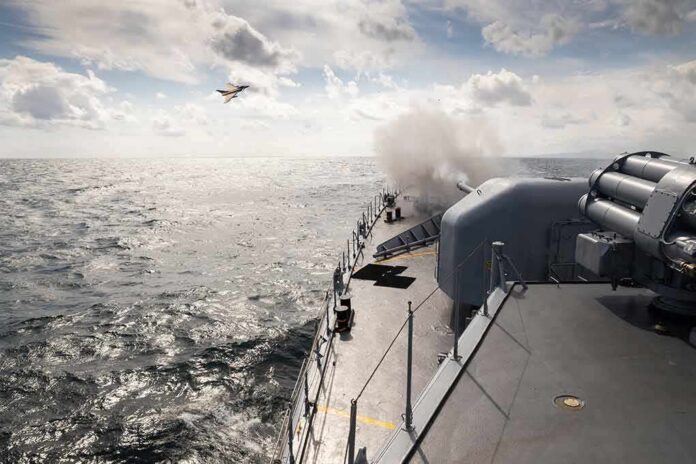
After 286 days at sea with more than 10,000 aircraft flights, the USS Abraham Lincoln arrived streaked with rust and due for heavy post-deployment upkeep that could sideline the carrier for a while.
Story Snapshot
- The carrier spent about nine months at sea with limited port calls and intense operations.
- Visible rust reflects long saltwater exposure, not proof of structural failure, according to a former Navy captain.
- Congress asked Navy leaders for answers on the ship’s condition and readiness after the marathon cruise.
- Extended deployments increase maintenance needs and compress yard schedules across the fleet.
What Happened: A Record-Stretching Cruise Now Shifts to Repairs
Military reporters documented the USS Abraham Lincoln’s unusually long deployment, citing roughly 286 days at sea, extended time on station, and a high operational tempo with more than 10,000 sorties flown and significant ordnance expended. Images showed the hull marked by rust, a normal result of months in saltwater without routine paint cycles during combat and standby tasks. The ship pulled into Thailand late in the deployment, offering sailors a brief reset before turnover and the next phase of maintenance and inspection work.
Congressional letters pressed Navy leaders about crew conditions, operational strain, and readiness following the back-to-back extensions. Lawmakers detailed a deployment that began in November and included only two port visits, one of them a single day in July, and asked for clarity on the ship’s status and the maintenance ahead. Those requests reflect a larger readiness concern: long cruises can deliver presence where it counts, but they also stack up deferred upkeep that must be caught up once the ship returns.
Why the Rust Matters—and What It Does Not Prove
Experts quoted in major outlets explained that rust streaks at the waterline are common after long, continuous time at sea and do not, by themselves, prove deep damage. A former Navy captain told CNN that addressing such corrosion during combat operations is not practical, and that the fix is routine but labor-intensive preservation work once pierside. That work includes cleaning, removing corrosion, priming, and repainting. It takes time, people, and proper yard access, which can be tight after long deployments.
Fleet planners have long weighed this tradeoff. RAND and other analyses describe how pushing carriers harder increases near-term presence while compressing maintenance windows later. That compression can ripple through shipyard schedules and delay other availabilities, which raises costs and extends timelines. The Lincoln’s experience—visible wear after a marathon cruise—fits that pattern. The ship will need a careful inspection and a post-deployment work package sized to the tempo it just sustained.
What Comes Next: Inspections, Yard Time, and Readiness
Navy maintenance doctrine calls for thorough inspections after long cruises, with preservation tasks and any corrective repairs bundled into a planned availability at a Navy shipyard or qualified facility. The service typically sequences cleaning, corrosion removal, primer, and protective coatings before system checks and certifications. While the public record does not list a final schedule for the Lincoln’s yard period, the intensity and duration of this deployment point to elevated work compared to a routine cruise.
For conservative readers, the lesson is simple. Strong presence requires strong maintenance. America cannot afford hollow readiness or political distractions that slow yards, starve parts, or sideline crews. Congress is right to demand answers, and Navy leaders must move fast to inspect, repair, and return this 100,000-ton asset to sea. The Lincoln’s sailors answered the call for months on end. Now the system must answer for them—on time, on budget, and without excuses.
Sources:
19fortyfive.com, militarytimes.com, cnn.com, forbes.com, youtube.com, time.com