

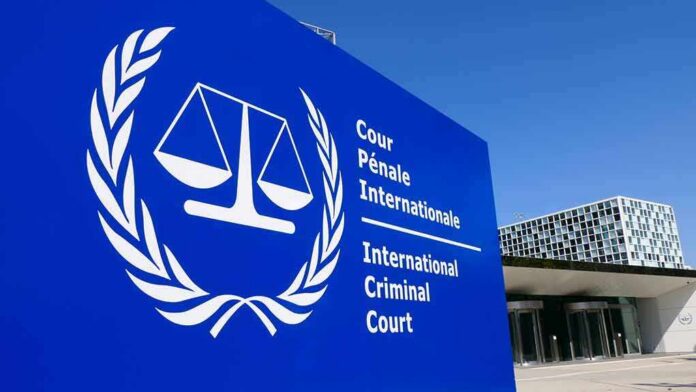
The top prosecutor at the International Criminal Court has been fired after member states ruled that he committed serious sexual misconduct, shaking a tribunal that has tried to target American and Israeli leaders.
Story Snapshot
- International Criminal Court states voted to remove Prosecutor Karim Khan after a disciplinary process over sexual misconduct claims.
- A United Nations investigation found evidence of non-consensual sexual contact and abuse of power toward a junior staffer.
- A panel of judges earlier said the same evidence did not prove misconduct beyond a reasonable doubt, exposing deep splits inside the court.
- Khan, who pushed arrest warrants targeting U.S. and Israeli officials, now faces professional bans at home and global disgrace.
ICC Prosecutor Removed After Emergency Member-State Vote
Member states of the International Criminal Court met in an emergency session at United Nations headquarters and voted to remove Prosecutor Karim Khan from office after reviewing sexual misconduct allegations and years of internal turmoil. The Assembly of States Parties president said that 82 states found Khan committed serious conduct and a serious breach of duty, enough to justify firing him from the job. This was the first time the court’s top prosecutor has ever been dismissed for misconduct, underscoring how severe the crisis had become.
The dismissal vote came after Khan had already been suspended from his duties in June while members weighed his future, an unprecedented step that placed his fate directly in the hands of the Assembly of States Parties. That same month, the court’s bureau decided to suspend him immediately and call a special session, saying it needed a final decision from all member governments. The firing caps nearly two years of mounting pressure that began when accusations surfaced in 2024 and drew wide media attention.
UN Investigation Found Evidence of Non-Consensual Contact and Abuse of Power
The Assembly’s action rested heavily on a lengthy investigation by the Office of Internal Oversight Services, a watchdog within the United Nations that the court asked to probe the allegations. According to reporting on that confidential file, the investigators interviewed witnesses and reviewed thousands of pages of records, then concluded there was “evidence establishing a factual basis” that Khan’s behavior escalated over time and led to non-consensual sexual contact with a female staff member. The report described coercive sexual behavior, abuse of power, and incidents in hotel rooms, Khan’s office, and his residence.
The United Nations investigators also found indications that Khan retaliated against two other employees after they passed the woman’s allegations to court officials, adding workplace abuse concerns to the case. The woman’s claims, detailed in press coverage, included being locked in Khan’s office and sexually touched, midnight demands to enter her hotel room, and repeated pressure to have sex. Documentation reviewed by reporters described unwanted sexual advances and “abuse” over several months rather than a single incident, painting a picture of sustained misconduct inside one of the world’s most powerful legal offices.
Judicial Panel Rejected Misconduct Standard, But Political Arm Overruled
Despite the watchdog’s findings, a three-judge panel appointed by the court’s governing bureau reviewed the same United Nations evidence earlier this year and reached a different conclusion. In a confidential assessment, the judges said the factual findings by the Office of Internal Oversight Services did not establish misconduct or breach of duty under the legal framework they were asked to apply. They criticized parts of the investigation, including how witness credibility was assessed, and said the record did not meet the strict “beyond a reasonable doubt” standard normally used to prove wrongdoing.
This split between investigators and judges set up a major power struggle within the International Criminal Court. The bureau later voted, by qualified majority, that Khan may have engaged in some form of misconduct and referred the matter to the full Assembly of States Parties for disciplinary proceedings. In the end, the political arm of the court — the member governments — sided with the watchdog report and the bureau rather than the judicial panel, using a lower threshold to find serious conduct and breach of duty and remove the prosecutor.
Multiple Allegations, Denials, and Outside Suspensions
The case did not involve only one accuser. A second woman stepped forward in 2025 to join the investigation, claiming sexual misconduct and abuse of power by Khan and describing incidents in work-related settings similar to the first complaint. Khan temporarily recused himself from leading the prosecution division as inquiries expanded, but he consistently denied all accusations, saying he had never engaged in any form of sexual misconduct or abused his position. His legal team called the oversight findings unfair and insisted that his conduct had never been coercive, exploitative, or unprofessional.
International Criminal Court (ICC) member states voted 82 to 13 to dismiss Chief Prosecutor Karim Khan, following his suspension last month over allegations of serious misconduct and breach of duty.#TV1Updates pic.twitter.com/QqoA1VbTQq
— TV One Uganda (@Tv1uganda) July 25, 2026
Outside The Hague, Khan’s professional standing also collapsed. Britain’s Bar Standards Board, which regulates lawyers in his home country, suspended him from practice after reviewing the same misconduct claims, and then upheld that suspension on appeal. The board’s decision means Khan is banned from working as a barrister in the United Kingdom while the cloud of sexual misconduct hangs over his record. Taken together, the United Nations probe, the member-state dismissal vote, and national-level sanctions have turned what began as an internal personnel case into a full-blown international scandal around the court’s leadership.
What This Crisis Means for American and Israeli Interests
Karim Khan was not a neutral figure in global politics. As prosecutor, he had pursued arrest warrants against leaders including Israeli Prime Minister Benjamin Netanyahu and other senior Israeli officials over the Gaza war, moves that drew sharp criticism from Israel and from many in the United States. The International Criminal Court has long faced U.S. sanctions and strong pushback when it tried to reach into American or allied actions, raising basic questions about sovereignty and the fairness of global bodies that sit above national voters.
For many conservatives, Khan’s fall reinforces deep concerns about these institutions. While the misconduct findings involve personal behavior, they hit a court that has tried to second-guess democratic nations on matters of war, security, and self-defense. A tribunal that claims moral authority over U.S. troops and Israeli leaders now admits its own top prosecutor committed serious sexual misconduct and a serious breach of duty. That reality will fuel arguments that globalist legal projects are not only unaccountable but also hypocritical — and that American policy should continue to resist any effort to let foreign bodies override the U.S. Constitution, national sovereignty, or the right of trusted allies to defend themselves.
Sources:
nytimes.com, bbc.com, aljazeera.com, ap.org, theguardian.com, youtube.com, apnews.com, en.wikipedia.org, facebook.com, jurist.org, reuters.com, abc.net.au, wsj.com