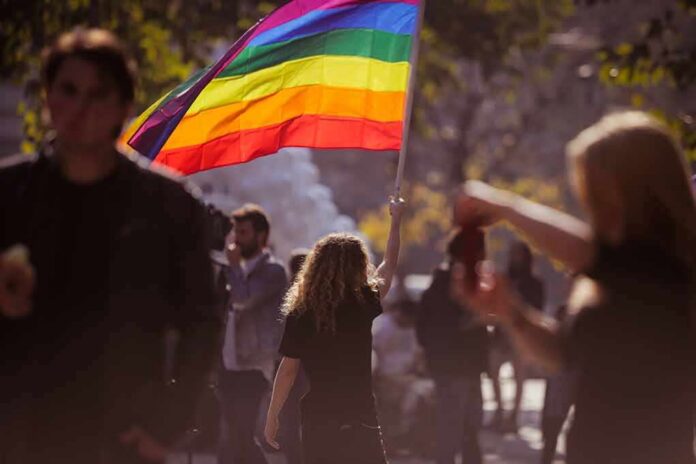
Praying Catholics at an Altoona Pride parade were mocked by a few attendees as police reported the event stayed peaceful, spotlighting a growing clash over public faith and speech rights.
Story Highlights
- Local reporting says Catholics prayed the Rosary and held religious signs along the parade route.
- A small group danced in front of the prayer group in a mocking way, witnesses said.
- Police on scene described the overall event as peaceful with no major problems.
- Organizers named participants and said fewer than ten Catholics joined to pray the Rosary.
What Happened Along the Parade Route
Local coverage describes a small group of Catholics who gathered near the Altoona Pride parade and prayed the Rosary. One participant carried a Rosary and a poster about repentance. Reporting also noted a holy picture held after the parade. These details anchor witness claims that prayer was the center of the counter-event. Police observed the scene along the route and at a nearby plaza and reported no significant problems during the gathering or the parade itself.
LifeSiteNews identified the organizer as Clark Stephenson and named participant Brett Dimaio, who both traveled to attend. The outlet reported fewer than ten Catholics prayed the Sorrowful Mysteries and sang hymns. The report also described moments of taunting, flag waving, and yelling directed at the group. The account included references to a sandwich board with messages about grooming and repentance worn by one participant, which likely drew strong reactions from parade attendees.
Police Assessment and On-Scene Conduct
Altoona Police Sergeant Patrick Tomassetti said the event was “totally chill,” and there were no significant incidents to report. His comments frame the day as peaceful, even as other descriptions mentioned some mocking behavior. The same local report said a handful of Pride participants danced in front of the praying group in what seemed like a teasing way. That conduct did not lead to arrests or force police to break up the gathering, according to the on-scene account.
The local coverage also identified a man named Mark, a Catholic who carried a Rosary and a sign stating a religious message about God’s love and repentance. That detail supports the description of open, public prayer. The blend of prayer and pointed signage shows why emotions were high but also why speech protections matter. The line between disagreement and harassment can blur at such events, but police saw no major breach of the peace that day.
Free Speech, Faith, and Public Space
Supreme Court case law protects speech on public issues in public places, even when that speech offends. In Snyder v. Phelps, the Court shielded harsh picket signs because the speech addressed matters of public concern in a traditional public forum. That precedent underscores why prayer, signs, and peaceful counterspeech generally remain lawful on city streets, so long as no one blocks access or threatens violence during the demonstration.
The Altoona scene fits a common pattern at public rallies: one side expresses moral or religious claims, the other reacts with visible pushback, and each side focuses on the other’s conduct. The facts here support a narrower takeaway. Catholics prayed and displayed religious messages. Some Pride participants mocked them with dancing. Police judged the overall event as calm. That outcome reinforces the core American rule: rights of speech, faith, and peaceful assembly apply to everyone in the square.
Sources:
lifesitenews.com, france24.com