A South Carolina Democratic lawmaker was arrested after investigators said he pointed a gun at an opponent’s relative during a primary-day dispute.
Story Highlights
- State Rep. Michael Rivers was charged with pointing and presenting a firearm after a June 9 confrontation, according to state agents.
- A probable-cause affidavit says Rivers retrieved a gun from his vehicle and aimed it at the victim following a campaign argument.
- Investigators cited witness statements and video evidence in the arrest warrant, according to reporting on the affidavit.
- The incident occurred at Green Pond Community Center in Colleton County on primary election day, authorities said.
SLED charge outlines a primary-day gun-pointing allegation
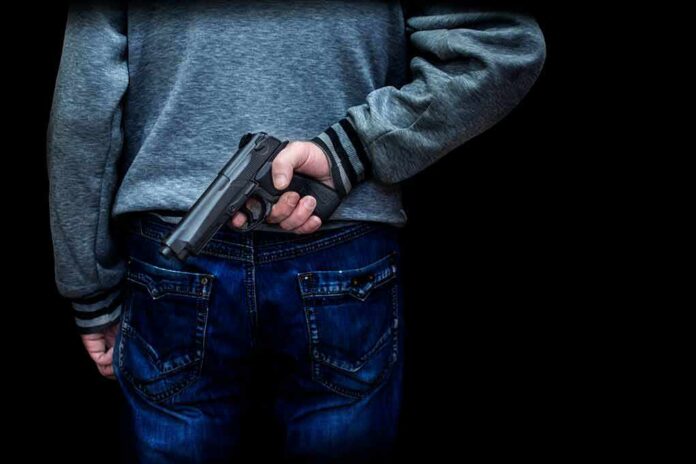
South Carolina Law Enforcement Division (SLED) agents charged Democratic State Representative Michael Rivers with pointing and presenting a firearm after a June 9, 2026 dispute tied to a House District 121 campaign. The probable-cause affidavit states a brief verbal clash ended when Rivers got a gun from his vehicle and pointed it at the other person. The reported incident took place at Green Pond Community Center in Colleton County during the statewide primary election. The felony arrest and booking were announced on October 9, 2026.
Reports on the arrest warrant say investigators based the allegation on witness statements and video evidence from the parking lot area. The affidavit, attributed to a SLED special agent, describes the sequence from words to weapon display. Court and jail records reflected the charge and Rivers’s detention before release. One outlet noted it was not established in the warrant whether the site was an active polling place at that exact time, though it was primary day.
What the law says about pointing a firearm in South Carolina
South Carolina law makes it a felony to point or present a loaded or unloaded firearm at another person. The statute does not require the gun to discharge, only that it be pointed at someone. A conviction can bring a fine at the court’s discretion or up to five years in prison. Courts have described the elements as a pointing or presenting, a firearm that may be loaded or unloaded, and a target who is another person. These standards explain the single charge SLED filed.
Election-day confrontations are especially sensitive because voters and volunteers must feel safe. Officials stress that firearms should never be used to intimidate or settle campaign arguments at or near public voting sites. In recent years, national trackers have logged election-related threats and incidents near civic locations. Those patterns have prompted bipartisan calls to protect voters and poll workers from intimidation or violence tied to politics. South Carolina’s clear statute provides a direct tool for prosecutors if a pointing occurs.
Campaign clash details and the status of the case
The affidavit places the dispute at Green Pond Community Center on Ivenia Brown Road. It says a family member of an opposing campaign figure was involved and that a short argument sparked the alleged gun pointing. SLED later announced the arrest and charge, and local outlets reported Rivers’s booking in Colleton County on the single felony count. The reported victim’s name was not disclosed in public summaries, which is common in early filings and protects privacy during the initial stages.
South Carolina Democrat State Lawmaker Arrested For Pointing Gun at Family Member of Opponent at Polling Location on Primary Day https://t.co/KTp5ukhwU1
— John Hartnett (@SirKnightJohn) October 11, 2026
Rivers has denied wrongdoing through statements reported by local media, and he has asked the public to withhold judgment until the courts review the facts. An arrest reflects probable cause, not a finding of guilt. The case will turn on what the video shows, how witnesses describe the distance and movements, and whether the state proves a clear pointing under the statute. For voters, the bottom line is simple: keep politics heated, but keep guns holstered at our civic spaces.
Why this matters to election integrity and public safety
Primary elections rely on open access and calm conduct. A gun-pointing allegation at a community center on voting day undercuts that standard and chills civic life. The law draws a bright line because people deserve security, not fear, when they vote. President Trump’s administration has urged strong enforcement against intimidation at election sites. State and local officials can back that up by applying clear laws, preserving video, and acting fast when disputes cross into threats.
Sources:
thegatewaypundit.com, fitsnews.com, postandcourier.com, newsbreak.com, supremecourt.gov, padilla.senate.gov