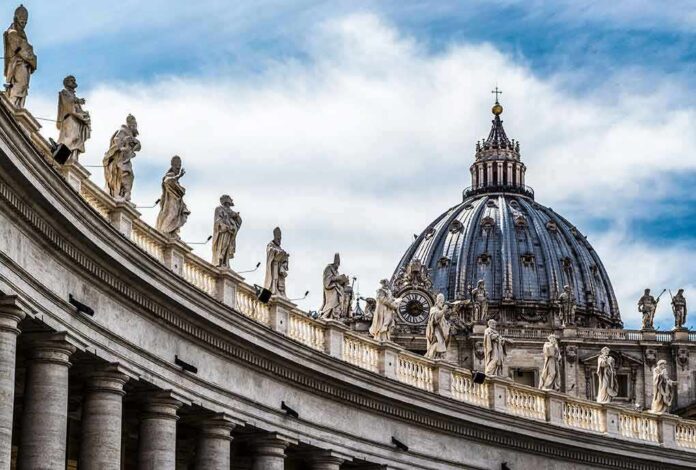
Pope Leo XIV will join a high-profile interreligious summit in Assisi that blends a Christian prayer service with a joint closing event featuring non-Christian representatives, reigniting a long-running debate over faith, unity, and clear doctrine.
Story Highlights
- Vatican News confirms Pope Leo XIV’s attendance at the October 25–27 Assisi gathering marking 40 years since 1986.
- Program features Christian prayer in the Lower Basilica, then a joint closing event with representatives of other religions.
- Organizers say religions pray at the same time in different places, echoing the original model.
- Cardinal Raymond Burke defends the “Co-Redemptrix” title as Vatican guidance discourages it.
Assisi Gathering Marks 40 Years Since John Paul II’s 1986 Event
Vatican News reports that Pope Leo XIV will visit Assisi on October 27 as part of a three-day interreligious peace gathering that commemorates the 1986 meeting launched by Saint John Paul II. The event brings together representatives of religions, cultures, and institutions from dozens of countries, with a public format designed to highlight prayer and a call for peace. Coverage notes 384 representatives from 53 countries, underscoring the scale and visibility of this year’s edition.
Reporting describes a program with a Christian prayer service in the Lower Basilica of Saint Francis, followed by a closing event with representatives of other faith traditions and a papal address. The schedule echoes the 1986 model that split prayer by tradition while still gathering leaders together in Assisi for a final appeal. The structure gives the Pope a platform to speak on peace while keeping formal worship distinct by religious community, according to multiple accounts.
Format Separates Worship While Emphasizing a Shared Appeal
Vatican News explains that Christians will pray in the Lower Basilica while other religions pray at the same time in different places, then leaders will come together for the closing program. Organizers present this as a balance between respect for doctrinal lines and a public stand for peace. That approach also reflects prior Vatican explanations that “interreligious prayer” means parallel prayer, not one merged rite, a technical but important boundary for many believers.
Cardinal Stephen Koovakad framed the gathering within a theme of “fraternity,” calling it the only solid architecture for a sustainable future. He linked the “Spirit of Assisi” to turning believers back to the best of their own traditions without sacralizing hatred. His remarks show how Vatican messaging ties peace language to moral renewal, while defending separate worship spaces to avoid doctrinal confusion and guard distinct identities during the public events.
Why This Matters to Faithful Families Watching the Line
Conservative Catholics have long wrestled with public interreligious events that risk blurring lines in the eyes of everyday people. The Assisi format claims to protect clear worship boundaries while still sharing one stage for peace appeals. That is the tightrope: a visible show of unity without implying all paths are the same. The 2026 plan mirrors the 1986 template, which the Vatican has said kept each tradition’s prayer separate even as leaders met in one city.
The scale of attendance, the symbolism of Assisi, and the presence of Pope Leo XIV make the optics powerful. Supporters point to the need for moral voices to reject war and hate in public. Critics worry that cameras miss the fine print on theological lines. The official program, however, places Christian prayer in a distinct site and time, then convenes a final gathering with other representatives, preserving a formal separation in worship while sharing a civic message.
Burke Defends “Co-Redemptrix” as Vatican Discourages the Title
Cardinal Raymond Burke has publicly defended calling the Blessed Virgin Mary “Co-Redemptrix,” saying she shares in a unique way in Christ’s saving work. His statement comes after the Holy See’s doctrinal office published Mater Populi Fidelis, a note approved by Pope Leo XIV that discourages use of the term on pastoral and theological grounds. Burke’s argument stresses Mary’s unique cooperation while the Vatican warns the title may confuse the faithful about Christ’s sole role.
The parallel controversies meet at the same point: clarity. The Assisi model insists worship stays separate while public appeals unite. The Marian note insists devotion stays true while titles avoid confusion. Families who guard doctrine, raise children in the faith, and resist activist agendas want plain lines. Organizers say this year’s program holds those lines in place by keeping prayers parallel and distinct, even as the Pope addresses the world’s need for real peace.
Sources:
lifesitenews.com, ground.news, zeale.co, infovaticana.com, perugiatoday.it