

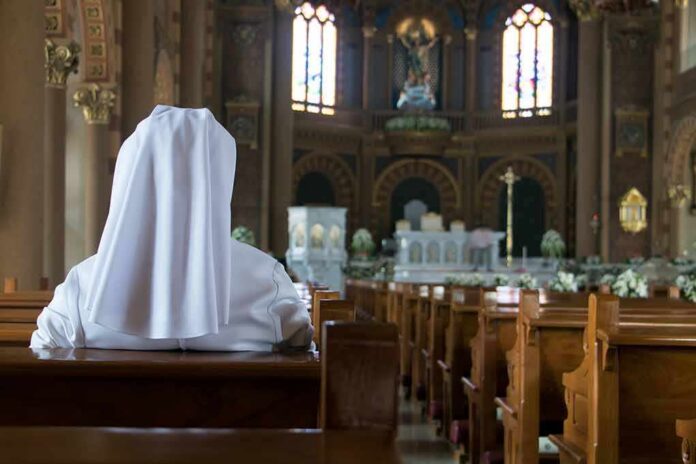
A Rhode Island Catholic bishop plans special Masses and parish “listening” sessions focused on LGBTQ outreach, raising fresh questions about how far welcome should go inside the Church.
Story Snapshot
- Bishop Bruce Lewandowski will host LGBTQ-focused Masses and listening sessions as part of diocesan outreach.
- The bishop says the effort is evangelization and welcome, not a change to Church doctrine.
- Diocesan consultations this year will review ministries and set direction for the next decade.
- The move fits a wider Church pattern where “welcome” is read as either outreach or policy shift.
Bishop outlines LGBTQ outreach as evangelization, not doctrine change
Bishop Bruce Lewandowski of Providence has described his plan to hold LGBTQ-focused Masses and parish listening sessions as a pastoral outreach. He has said the goal is to welcome people to an encounter with Jesus and invite them into parish life. In interviews, he stressed that “Jesus’s love is available to everybody” and framed the push as evangelization, not a rewrite of Catholic teaching or morals. He often summarizes the approach as knocking on doors and listening first.
The planned gatherings will include liturgies and conversations at parish sites across Rhode Island. The bishop’s office has also launched a wider consultation with parish assemblies this summer and fall. That program is set to review current diocesan ministries and shape direction for the next ten years, according to recent public reporting on diocesan communications. The outreach and the consultation will likely overlap, since both aim to assess needs and strengthen parish engagement.
Context: a recurring Church debate over “welcome” versus “change”
This type of plan often triggers debate in Catholic circles. Supporters see listening sessions as standard parish work that invites people back to the sacraments. Critics worry that targeted events may blur lines on long-standing moral teaching. Coverage of Lewandowski’s own remarks shows he uses common pastoral language about welcome and evangelization, while not claiming a shift in doctrine. That framing matches a broader pattern where “accompaniment” is pastoral contact, not policy.
Rhode Island has seen friction on this topic before. Years before Lewandowski’s installation, a Providence bishop urged Catholics to avoid Pride events, arguing they conflict with Church values and can harm children. Some local clergy then urged those who identify as LGBTQ to remain in the pews and in parish life. Those past disputes still color how Catholics hear today’s “welcome” plans, even when leaders say the goal is outreach and clear teaching.
What the bishop has said and how the diocese is proceeding
In local media interviews, Lewandowski linked his approach to simple, face-to-face ministry. He said the Church invites people to meet Christ by how Catholics live and witness to the faith. He also stated that everyone is welcome to that encounter, a line he has repeated in public settings. These comments track with his early months in Providence, where he spent time visiting parishes, schools, and civic events as part of his installation as the tenth Bishop of Providence.
The diocese has not released a full calendar or detailed guidelines for the LGBTQ-focused Masses and listening sessions. Without a complete schedule and rubrics, some practical questions remain. How will homilies and parish messaging explain Catholic teaching on marriage and sexuality? How will the diocese ensure that welcome does not imply approval of conduct that Church doctrine calls sinful? Those details matter, and the diocese’s coming consultations may shape consistent answers across parishes.
Why this matters for families, faith, and civic life
Parish life is where many families anchor their moral teaching, charity, and community ties. Clear doctrine and real mercy are both needed if the Church hopes to call people to conversion and keep the faithful united. If the bishop’s effort keeps teaching intact while meeting people with patience, many will welcome that. If lines blur, parents and pastors could face confusion. For now, the bishop’s own words place the work in evangelization, not in changing what the Church believes.
Sources:
lifesitenews.com, youtube.com, en.wikipedia.org, cnn.com, bostonglobe.com