
Two U.S. officials died during an anti-drug raid in Mexico—yet Mexico’s president says her federal government didn’t even know they were there.
Story Snapshot
- Mexican President Claudia Sheinbaum said Mexico’s federal security cabinet was not informed that two U.S. “instructor officers” were operating in Chihuahua.
- The U.S. personnel and two Mexican state investigators died in a vehicle crash after a raid on clandestine drug labs in a five-vehicle convoy.
- Sheinbaum attributed the operation’s authorization to the Chihuahua state government and ordered a review for possible national security violations.
- Mexican officials planned discussions with the U.S. ambassador as questions grew about how bilateral anti-narcotics work is coordinated.
A Deadly Raid Exposes a Cross-Border Coordination Gap
Chihuahua state authorities confirmed that two U.S. embassy-linked “instructor officers” and two Mexican state investigators were killed Sunday, April 19, after participating in anti-narcotics activity targeting clandestine drug labs. Officials said the group was traveling in a five-vehicle convoy when the vehicle carrying the four victims skidded off the road into a ravine. The crash happened as they returned from the raid, highlighting how dangerous field operations have become.
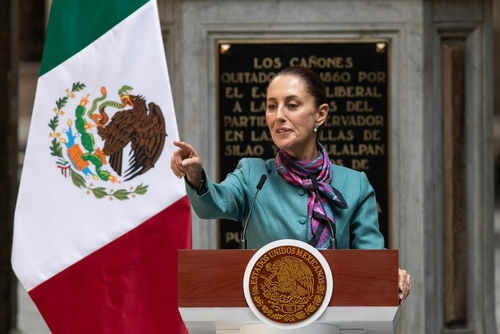
President Claudia Sheinbaum addressed the incident at her Monday, April 20 press conference and delivered the statement that now dominates the story: Mexico’s federal government, she said, was not informed that the U.S. personnel were operating in the country in connection with the raid. Sheinbaum said the operation was coordinated at the state level in Chihuahua, not through the federal security cabinet, and she ordered a review to determine whether national security rules were violated.
What Sheinbaum’s Statement Signals About Sovereignty and Control
Sheinbaum’s response places Mexico’s sovereignty debate front and center. Under Morena-era leadership, Mexico has repeatedly emphasized limits on foreign security involvement, even while cooperating with the United States against cartels and synthetic drugs. By stressing that federal officials were not briefed, Sheinbaum effectively drew a bright line between legitimate cooperation and activity that appears to bypass federal oversight. That distinction matters because it can determine what Mexico allows next—and what it demands from U.S. agencies.
The immediate procedural question is simple but politically explosive: who authorized U.S. personnel to be close enough to an operation described as a raid, and under what rules? Reporting described the Americans as “instructor officers” involved in anti-drug training, yet they were also linked to events surrounding a drug-lab operation in rugged terrain. It does not specify the precise U.S. agency involved, leaving uncertainty about the chain of command and the scope of their mission.
Why This Matters to Americans Watching the Fentanyl Crisis
For U.S. audiences—especially those frustrated with years of border disorder and fentanyl deaths—this incident underscores the reality that the drug war is not confined to speeches or paperwork. American personnel were working alongside Mexican counterparts in a cartel-heavy region, and they died doing it. At the same time, Sheinbaum’s claim of federal unawareness suggests that even when cooperation exists, it can be fragile, fragmented, and subject to political pressure inside Mexico.
Potential Fallout for Joint Operations and U.S.-Mexico Trust
Sheinbaum said Mexico would seek more information and assess whether security protocols were breached, and her government indicated it would engage directly with the U.S. ambassador through Mexico’s foreign ministry. In the short term, that kind of review can slow or freeze joint operational activity, especially if Mexico decides states cannot coordinate sensitive efforts without federal approval. Longer term, the episode could push both governments toward tighter rules that prioritize political cover over speed and effectiveness.
Sheinbaum says she was unaware of US agents inside Mexico following lethal accident https://t.co/CtY0CegDPz pic.twitter.com/Wg8M2yzfod
— NA404ERROR (@Too_Much_Rum) April 20, 2026
The broader trend is one many Americans already recognize: governments often struggle to deliver basic public safety while agencies and politicians protect their own turf. Mexico’s federal-state friction and the U.S.-Mexico sovereignty debate create openings that cartels can exploit, particularly in regions where clandestine labs can be moved, hidden, and rebuilt quickly. With limited public detail about who approved what, the next steps—Mexico’s review and U.S. diplomatic responses—will matter as much as the tragedy itself.
Sources:
Sheinbaum says she was unaware of US agents inside Mexico following lethal accident
Mexico to probe security role of US officials killed in Chihuahua car crash