

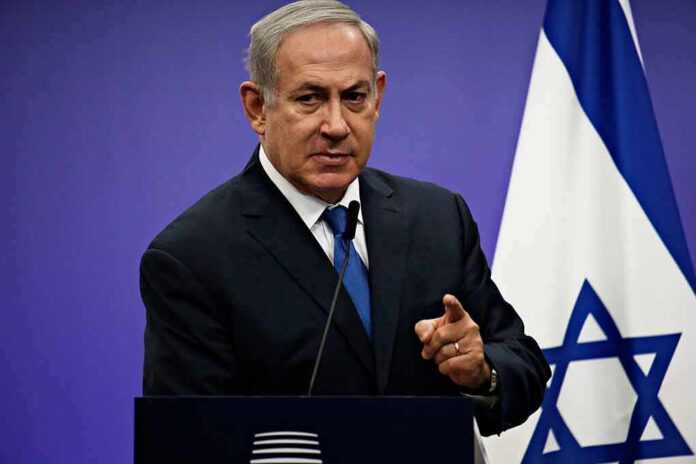
Israel’s prime minister said Iran tried to assassinate one of his sons, raising alarms about Tehran’s reach and intent.
Story Highlights
- Benjamin Netanyahu said on live television that Iran tried to kill one of his sons.
- He did not name which son or give details on timing or method.
- Reports say he tied the claim to security arrangements for political figures.
- Iran’s record includes decades of foreign plots and assassinations, according to experts.
Netanyahu’s On-Air Allegation and What He Said
Israeli Prime Minister Benjamin Netanyahu stated during a live phone interview that Iran “tried to kill” one of his sons. Multiple outlets reported the same quote and framing from the broadcast on Monday. The Times of Israel captured the core line and timing from the Channel 14 segment, which featured questions about personal security and threats tied to Iran. The Jerusalem Post likewise reported that Netanyahu linked the threat to him and his family during the call, consistent with the on-air exchange.
Coverage from Gulf News and Arab News emphasized that Netanyahu did not identify which son was the target or provide details on when or how the attempt occurred. Those stories echoed his claim while noting the lack of specifics shared publicly during the interview. Reporting from Moneycontrol matched that core point and quoted him saying security for his family is a necessity, not a luxury, in light of the alleged attempt. Together, the accounts establish what he said and the context of the broadcast.
Security Context and Link to Protective Measures
The Times of India reported that the Channel 14 interviewer, Noam Amir, asked whether the claim came from intelligence provided to the prime minister. Netanyahu answered that it was an “unbelievable case,” and he tied it to ongoing security arrangements for candidates, according to that account. That framing places the claim inside an active protective-security conversation, not as a vague anecdote. A separate report noted Netanyahu’s argument that family protections are necessary due to persistent threats.
This claim arrives amid a long, documented pattern of external targeting by the Islamic Republic of Iran. Analysts at the Washington Institute describe decades of plots that tracked dissidents, Israelis, Jews, and Western interests, including attempts at assassinations and abductions across many countries. That record does not prove any one allegation, but it shows a historical pattern that policymakers take seriously. It also explains why Israeli security services might adjust protection even without public details.
What Is Known, What Is Not Public, and Why It Matters
Public reporting agrees on several points: the statement was made, the venue was live television, and Netanyahu did not specify which son was allegedly targeted. The stories do not present dates, methods, or named investigative findings. Media outlets have attributed the claim to Netanyahu’s own words and, in some cases, to security conversations he referenced with Israeli officials. Those facts outline a clear allegation and a rationale for sustained protection of his family.
For Americans, the stakes tie back to national security and alliance strength. Iran’s leadership and its security arms have pursued enemies abroad for decades, as policy research and case records reflect. A threat against the family of an allied leader underscores why the United States must keep firm pressure on state sponsors of terror, strengthen intelligence sharing with Israel, and defend free nations against rogue regimes. President Trump’s administration has framed this as a clear-eyed policy choice grounded in deterrence and defense of our friends.
How This Could Shape Policy and Security Cooperation
Israeli authorities will set protective measures for Netanyahu’s family, and those steps may remain classified. Still, claims like this often drive closer coordination among allied services and could prompt targeted sanctions, visa actions, or legal cases when specific actors are identified. United States lawmakers who back strong ties with Israel may cite Iran’s global track record to reinforce support for counterterror tools and sanctions enforcement that cut off funding and travel for operatives who plan attacks abroad.
Sources:
insiderpaper.com, arabnews.com, timesofisrael.com, timesofindia.indiatimes.com, jpost.com, english.varthabharati.in