
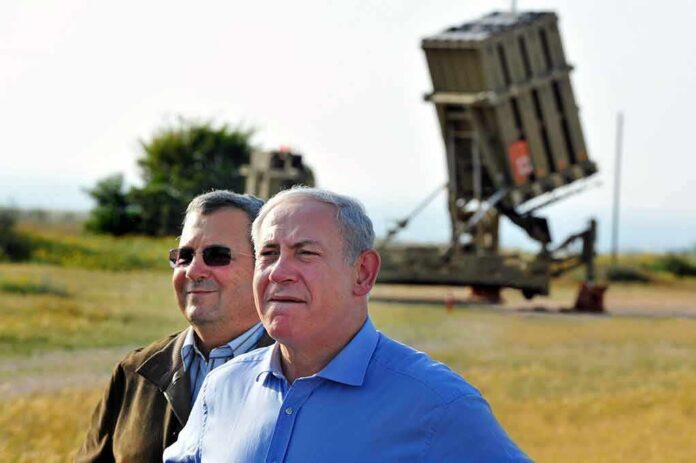
An Israeli official says Prime Minister Benjamin Netanyahu and Jared Kushner agreed that a United States general will supervise Hamas disarmament before any full Israeli pullout from Gaza.
Story Highlights
- Israeli withdrawal is tied to verified Hamas disarmament under U.S. supervision.
- Netanyahu says Israel will not withdraw until all Hamas weapons are gone.
- President Trump says Israel is aligned with disarmament goals in the plan.
- Hamas disputes the sequence, saying pullout must come first.
Israeli Position: No Withdrawal Before Verified Disarmament
Prime Minister Benjamin Netanyahu said Israel will not withdraw from Gaza until Hamas is fully disarmed. He described disarmament as covering heavy, light, and all weapons. His stance matches the United States-backed roadmap that links troop withdrawal to verified demilitarization. The plan includes a “final verification” step before complete Israeli withdrawal. These conditions set a high bar for security and seek to prevent Hamas from rearming after a pullback.
Reuters reported that the Board of Peace plan phases disarmament over time and requires Gaza to be “free of weaponry” before the last troops leave. That structure aims to end the “withdraw first or disarm first” standoff by adding a clear verification step. Critics argue that the plan must prove it can actually find and remove hidden weapons and tunnels. Supporters say the tie to withdrawal ensures real leverage over compliance on the ground.
U.S. Role: American General To Supervise Disarmament
An Israeli official told Agence France-Presse that Netanyahu and United States envoy Jared Kushner agreed to have an American general supervise the disarming process. That supervision would cover how Hamas turns in weapons for decommissioning. The report did not publish the full protocol. It did not show the inspection authority, chain of custody, or enforcement rules. The core fact remains: both sides accepted American-led oversight in principle to verify that weapons are actually surrendered.
The United States outlined earlier a demilitarization approach that could include funded buybacks for weapons. That idea signals Washington is ready to pair pressure with incentives to move guns and rockets out of circulation. Still, Reuters noted Hamas sources claimed they had not received a detailed or concrete disarmament proposal. That gap highlights why the mission scope of any supervising general, and the metrics for “verified,” will matter to both security and trust.
Trump Administration Framing And Israeli Alignment
President Trump said Israel was happy with the disarmament deal structure and had helped shape it. He tied any progress to removing Hamas’s ability to attack Israel from Gaza. That position backs Israel’s demand for proof of disarmament before a full pullout. The message to partners is simple: no free passes for terror groups, and no repeat of past deals that let militants hide rockets, rearm, and strike civilians later.
After roughly four hours of talks, Netanyahu, Jared Kushner, Nickolay Mladenov and Tony Blair concluded their meeting on the next phase of the Gaza plan.
Israeli and US officials reportedly agreed that reconstruction in Gaza will not begin until Hamas has been fully disarmed and… pic.twitter.com/zCJsaRcQPi
— ECO3 (@sirEC03) August 17, 2026
For conservative readers, this reflects a core principle: peace follows strength and verification, not vague promises. American leadership puts muscle behind the plan, not just speeches. A United States general supervising disarmament would raise the cost of cheating and lower the risk of a fake “compliance” declaration. That safeguards Israeli security and protects American interests. It also avoids endless funding of broken agreements that reward bad actors at the expense of law-abiding families.
Sticking Point: Hamas Demands Withdrawal First
Hamas insists it will not discuss giving up arms without guarantees that Israel will fully withdraw. Its officials have repeated that demand in public briefings. That position keeps the core fight over sequence alive. Israel says disarm first, then withdraw. Hamas says withdraw first, then consider steps. The United States plan tries to break this deadlock with step-by-step checks and a final verification gate before the last troops leave.
This gap is not only political; it is practical. Without solid inspections, secure storage, and tight tracking, weapons can vanish into tunnels or hidden rooms. Israel knows that risk well. That is why Netanyahu set a clear line on “all weapons,” and why American supervision matters. The challenge now is turning headlines into a working, testable system that finds, logs, moves, and destroys weapons under watch—so the rockets do not come back.
What To Watch Next: Verification, Authority, And Compliance
Key details are still missing in public view. The record does not show the full inspection authority for the U.S. general, the storage standards, or how teams will confirm tunnels are cleared. The roadmap’s credibility will rest on those rules and the ability to enforce them. If Washington can lock in clear metrics and quick penalties for cheating, the deal can hold. If not, the process risks stalling in the same loop that has failed before.
For Americans who value strong borders, rule of law, and safety, the bottom line is clear. Verified disarmament first is common sense. It protects families and allies, and it blocks terror groups from gaming the process. The Trump team’s push for American-run verification is a step toward that goal. The next step is proving the plan works in the field, with real inspections and real consequences, before any final Israeli withdrawal proceeds.