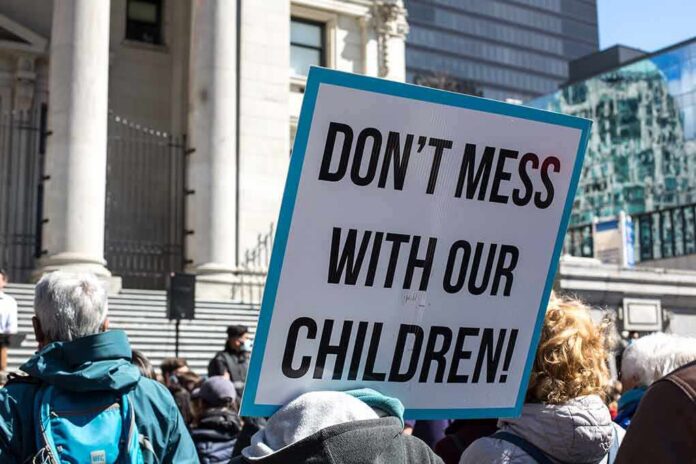
Vice President JD Vance called the unidentified sender of a gender-transition letter to an 11-year-old a “pervert” who “ought to go to prison,” and urged a Department of Justice investigation, drawing a roaring ovation from Texas voters.
Story Highlights
- Vance urged a federal investigation after a Texas mother said her 11-year-old received a transition letter.
- The sender is unknown; no letter image or case file is public at this time.
- Reports describe a broader “mystery mailer” to students telling kids to bypass unsupportive parents.
- Talarico’s record on minors’ transition policy remains a flashpoint, but no tie to the mailer is proven.
Vance Presses for Investigation and Legal Consequences
At a Fox News town hall in Texas, Vice President JD Vance responded to Fort Worth mother Rebekah Smith, who said a letter came to her 11-year-old about gender transition without parents knowing. Vance told her to contact his staff and said the Department of Justice should look into it. He said anyone who sends such a letter to a child is a “pervert” who “ought to go to prison,” drawing loud applause from the audience.
Vance’s call put federal law enforcement on notice and framed the episode as a parental-rights issue. He argued that adults should not push children to hide life-changing decisions from moms and dads. He tied the concern to basic family authority and child safety. His stance matched the crowd’s mood, as many conservatives see activist campaigns that target kids as an attack on the family and on common sense limits.
What We Know and What Is Still Unclear
Public reports so far do not show the actual letter. The sender is unknown, and no police report, case number, or charging document is public. That means the criminal claim has not been tested against a specific law. Vance’s push seeks to close that gap by triggering a formal inquiry. The core facts remain the mother’s account and Vance’s on-the-record response. Without the letter, full verification and legal analysis are not yet possible.
Separate reporting describes a “mystery mailer” sent to Texas students. That brochure told minors whose parents do not support a gender identity to “find a safe adult,” like a teacher, counselor, friend’s parent, or therapist. The sender is unidentified. The coverage links the brochure’s message to debates over parental rights, but it does not prove a link to the mother’s specific letter or to any named campaign or candidate.
The Talarico Factor: Record, Rhetoric, and Limits
Vance also criticized Democratic Senate candidate James Talarico’s policy record. Reports note Talarico voted against a 2023 Texas law that restricts certain medical transitions for minors. His earlier comments in a 2019 hearing described denying a child’s gender identity as harmful and, in some cases, “abusive.” At the same time, other statements show him saying policymakers must protect kids while honoring parents’ rights. That mixed record keeps the issue heated in a tight race.
What is not shown in the available record is a factual tie between Talarico and the alleged letter or the broader mailer. The reporting does not show that he sent, backed, or knew about any such communication. One fact-check also pushed back on an ad claim about his position on funding for surgeries for young children, rating it false. These limits matter. Voters can judge his voting record and words, but the sender question is a separate, unresolved issue.
Why Parental Rights Are Central for Voters
Parents want a clear say in any decision that affects their child’s body, health, and identity. Many see mail or school messaging that sidelines them as a red line. They also see a wider pattern: activists working around parents, government agencies drifting into family life, and kids being targeted by ideologues. That is why Vance’s words landed. He promised action, not talk, and drew a bright line around the home and the family’s first duty to protect children.
If authorities confirm a mail campaign urging kids to bypass parents, expect legal and political fallout. Investigators could seek postal, school, or digital records to identify a sender and test if any law was broken. If the letter exists, producing it for law enforcement would allow a professional review. If no statute fits, lawmakers may move to close gaps. Either way, the public deserves facts, and families deserve respect and transparency from anyone contacting their children.
Sources:
facebook.com, washingtonexaminer.com, newsmax.com, thepatriottalon.com, sacurrent.com