Nancy Pelosi publicly rebuked left-wing Democrats over Israel, exposing deeper fractures inside her party that could reshape foreign policy debates nationwide.
Story Snapshot
- Pelosi called Zohran Mamdani and Abdul El-Sayed’s past Israel comments “wrong” and not reflective of House Democrats.
- Mamdani declined to support Israel as a specifically Jewish state, framing his view as equal rights for all.
- El-Sayed questioned whether Israel is a true U.S. ally and criticized American funding and wars tied to the region.
- Reports say both men pushed to end U.S. military aid to Israel and used “genocide” language about Gaza.
Pelosi Draws a Line Against Party Left on Israel
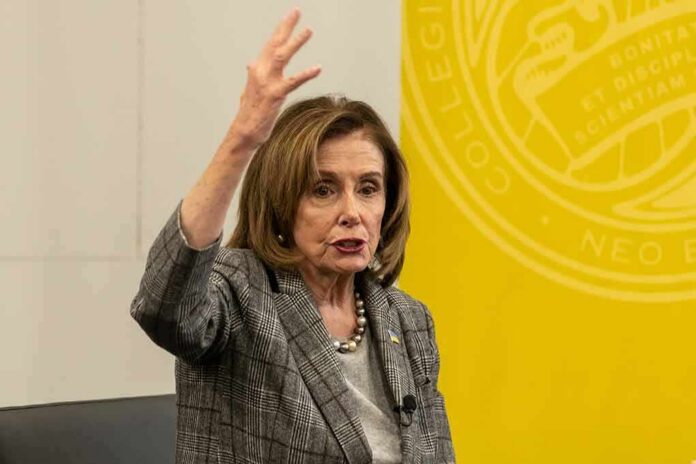
On October 29, 2026, Nancy Pelosi said comments by Zohran Mamdani and Abdul El-Sayed about Israel were “wrong” and did not represent congressional Democrats. She made the remarks on Donny Deutsch’s On Brand podcast, signaling a clear break with the party’s activist left. Pelosi’s statement matters because her voice still carries weight with donors and candidates. Her framing tried to wall off Congress from rhetoric that questions Israel’s core identity as a Jewish state.
Pelosi’s rebuke did not rest on a caucus vote or a formal statement. Reports quote only her personal view and do not list other Democratic lawmakers who agree. That gap leaves room for more intraparty conflict as primaries advance. Still, the practical effect is real. Candidates and committees hear a warning: statements that cast doubt on Israel’s Jewish character or on the alliance can draw public pushback from a leading Democrat.
Mamdani Rejects Religious Privilege, Sidesteps Jewish-State Recognition
Zohran Mamdani has said he supports Israel “as a state with equal rights,” but he will not back a state that “privileges one religion over the other.” He applies this rule broadly, naming Israel and Saudi Arabia among others. He has affirmed Israel’s right to exist, yet he declines to endorse it as a Jewish state. That distinction angers many Jewish voters who see Jewish self-determination as essential to Israel’s identity and security.
Coverage describes Mamdani repeating the equal-rights framing in multiple interviews. He rejects any citizenship hierarchy based on religion. Supporters call that stance consistent and universal. Critics say it erases Israel’s unique role as the world’s lone Jewish homeland after centuries of persecution. Pelosi’s critique aligns with those critics, who argue that refusing Jewish-state recognition functions, in effect, as a denial of Israel’s core national character, even if couched in equality language.
El-Sayed Questions the Alliance and U.S. Aid
Abdul El-Sayed has questioned whether Israel is a true U.S. ally. He argues that Israel takes American money and pulls the United States into wars it should not fight. He has called for ending military aid, not only to Israel, as part of a wider push to limit U.S. involvement in foreign conflicts. These claims run against a long tradition of bipartisan support for Israel’s defense and intelligence partnership with the United States.
Reports also say El-Sayed has used the word “genocide” to describe Israel’s actions in Gaza and urged cutting off military funding. That framing hardens divides. Many Americans, including a strong majority of conservatives, view Israel as a key ally in a dangerous region and see such language as reckless. Pelosi’s signal puts distance between House Democrats and this rhetoric, even though she did not announce any caucus discipline or policy change in the interview.
Why This Matters to Conservative Readers
Pelosi’s comments show Democrats still wrestling with their left flank on national security. When candidates question Israel’s Jewish identity or the alliance, they also chip at the broader idea of America standing by its friends. That approach can embolden enemies, unsettle allies, and confuse voters who want moral clarity. President Trump’s administration stresses strong alliances, peace through strength, and a clear stand against terror. Pelosi’s pushback hints that even Democrats see the political danger in anti-alliance talk.
Nancy Pelosi & Donny Deutsch on Israel and antisemitism in the Democratic Party
Donny: It feels like a wing of the party has just abandoned Israel and has tones of antisemitism. It's upsetting as a Jewish man.
Pelosi: I really do not know of anybody there on our side who…
— It's politics (@uspolitics1111) October 30, 2026
For families who value stability, the stakes are simple. Israel helps the United States counter Iran’s regime, track terror threats, and deter chaos that spikes oil prices and energy bills. Efforts to slash aid, redefine Israel’s identity, or excuse violence signal weakness abroad and disorder at home. Voters should watch if Democratic leaders turn Pelosi’s words into action or keep allowing candidates to blur the line between fair criticism and rhetoric that undermines an ally when it counts.
Sources:
news.meaww.com, foxnews.com, thehill.com, mediaite.com