
Wall Street just cheered Iran peace talks so hard that the Dow closed at a record high, even as Iran’s regime publicly denies that real talks are happening.
Story Snapshot
- Dow Jones Industrial Average hits a record close on optimism about United States–Iran talks.
- President Trump signals fresh negotiations, easing fears over war and high energy costs.
- Iranian officials deny formal talks, exposing how fragile this market optimism really is.
- Lower oil prices offer relief to families after years of inflation driven by foreign chaos.
Dow’s Record Rally Tied Directly to Iran Peace Hopes
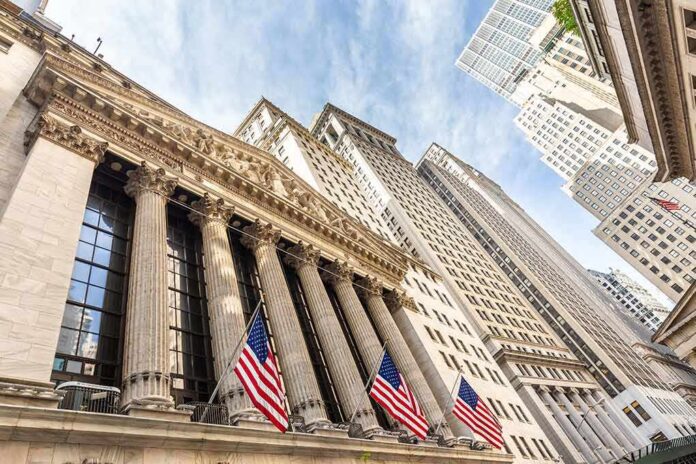
U.S. stock markets kicked off the week with a sharp rally, and the Dow Jones Industrial Average finished at a new record high as traders bet that progress in Iran talks could cool the war and bring down energy prices. The Standard and Poor’s 500 and the Nasdaq indexes also climbed strongly, with gains of around one to two percent showing broad confidence across the market. For many investors, this move signals real hope that a long stretch of fear and volatility tied to the Iran conflict may finally ease.
Market reports connect this surge clearly to optimism that the United States and Iran are moving toward renewed negotiations and a possible peace framework. Traders reacted not only to the day’s headlines but to weeks of signals that President Trump wants a deal that reopens the Strait of Hormuz and stabilizes oil supplies. As global oil prices slipped from crisis highs, stocks rallied across sectors, rewarding companies that depend on affordable energy and giving ordinary retirement accounts a much-needed lift after years of inflation pressure.
President Trump Pushes Talks as a Path to Lower Energy Costs
President Trump has repeatedly told the public that negotiations with Iran are planned, active, or about to restart, framing diplomacy as a way to end the war and reopen key sea lanes for oil. He has said talks would resume in places such as Pakistan and Qatar, sometimes after pausing planned military strikes to give diplomacy “one last chance.” These statements line up with reports of indirect contacts and a draft peace framework, including ideas for Iran to reduce highly enriched uranium and allow safer passage through the Strait of Hormuz.
For conservatives who have watched energy bills soar under years of global chaos, that focus matters. A preliminary agreement between the United States and Iran to end the war and reopen the Strait has already been tied to lower oil prices and easing inflation fears on Wall Street. If shipping routes stay open and the region calms down, American families could see real relief at the gas pump and in grocery aisles, instead of paying for endless foreign crises and reckless spending pushed by past globalist leaders. In this sense, Trump’s pressure campaign aims to pair peace with economic stability for Main Street, not just gains for big banks.
Iran’s Public Denials Reveal a Risk Behind the Rally
Even as markets rally, Iranian officials have openly rejected some of Trump’s most optimistic claims about talks, saying there are no plans for direct meetings and accusing Washington of misrepresenting the state of negotiations. Iran’s foreign ministry has said its diplomacy will not be rushed by American timelines, and at times has denied that any real contacts took place after Trump paused major strikes and spoke of “significant points of agreement.” This split between what the White House describes and what Tehran admits shows that diplomacy is still fragile and far from a firm peace deal.
Analysts warn that many of these agreements are still only broad principles or memoranda of understanding, not final treaties with clear enforcement. Iran has complained about shifting U.S. demands, while American officials insist that disposal of highly enriched uranium and strict limits on nuclear work must be part of any lasting deal. This messy picture means that while Wall Street can rally on headlines and hopeful leaks, families and small businesses should stay alert: if Iran drags its feet or walks away, energy prices could jump again and the same global instability that hurt savings during past administrations could return in force.
What This Means for Conservative Voters Watching Their Wallets
Today’s market surge shows how quickly expectations about foreign policy can change the outlook for everyday Americans who are tired of paying for overseas chaos. When traders believe the Iran war might end, stocks rise and oil falls, and that can help curb inflation without another round of big-government programs or tax hikes. For a conservative audience that values limited government and strong national defense, Trump’s mix of military pressure and tough diplomacy offers a path to lower costs while keeping American power clear.
At the same time, this rally is a reminder not to trust markets alone as proof that foreign regimes will behave. Iran’s leaders continue to send mixed messages, and their public denials show why the United States must stay strong, keep its guard up, and avoid any deal that weakens our security or rewards bad actors. Conservative voters who remember years of “woke” spending, heavy regulation, and weak borders know that a real peace must put American interests, family budgets, and constitutional strength first, not globalist dreams that leave our country exposed.
Sources:
youtube.com, latimes.com, reuters.com, bloomberg.com, theguardian.com, investing.com, devdiscourse.com, npr.org, aljazeera.com, nytimes.com, washingtonpost.com, cbsnews.com