A classified watchdog warning about airport shoe screening met a firm rebuttal from Homeland Security, which insists travelers were never put at risk.
Story Highlights
- DHS says the shoes-on policy kept officer discretion and never put travelers at risk.
- A classified inspector-general audit reportedly flagged scanner limits with footwear.
- DHS says it fixed three of four findings; the last was not a security issue.
- TSA cites layered screening and dedicated shoe-scanning tech to back the policy.
What DHS Says Was Fixed And Why It Matters
Homeland Security Secretary Markwayne Mullin told Congress that the department addressed three of four concerns raised by the internal watchdog, and that none of the changes ever put travelers in danger. He said the final concern was not tied to security, but did not describe it in public. His account places the focus on layered screening and officer judgment. That includes case-by-case shoe removal when an alarm, behavior, or tip calls for it, which the policy still allows.
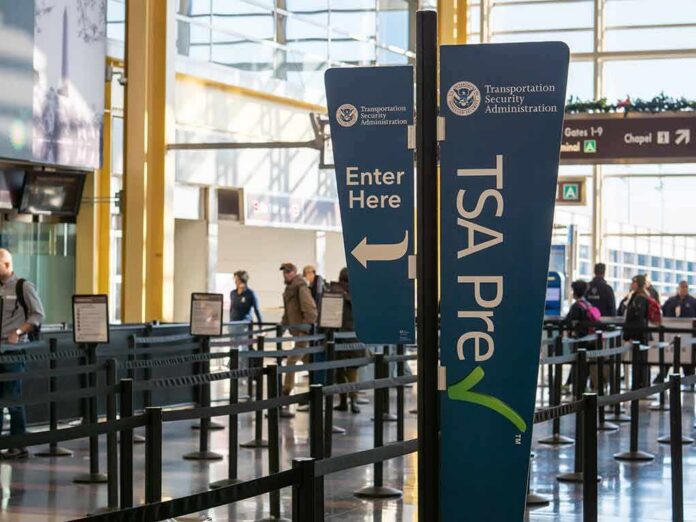
The Transportation Security Administration’s July 8, 2025 change ended routine shoe removal but did not forbid it when screening requires extra steps. The agency framed the move as part of a broader, risk-based approach used for years with Trusted Traveler lanes. Transportation Security Administration PreCheck has long allowed most vetted passengers to keep shoes on, which established an operational precedent for this kind of screening choice. That history supports the idea that shoes-on can work inside a layered system.
What The Watchdog Reportedly Found
Rep. Eli Crane said a classified inspector-general briefing on screening weaknesses was “very concerning”. Reporting on the same audit says some full-body scanners at checkpoints may miss threats hidden in shoes, creating a vulnerability after routine shoe removal ended. CBS News also reported the watchdog used red-team testing and sent an urgent warning within weeks, with a final classified report dated November 1, 2025. These claims push for a clear, public accounting from the agencies involved.
DHS has not publicly listed which three concerns it closed, or how it validated fixes. Without those details, the public cannot judge detection rates, nationwide coverage, or testing methods. That gap fuels calls to release an unclassified summary and show closure records. Still, Mullin’s statement that three of four items are resolved, and that the remaining item is not about security, is now the standing government line in open session. Lawmakers and travelers should demand documentation to back that claim without exposing sensitive methods.
How Layered Screening And Tech Factor In
The department points to layered defenses that do not rely on any one step. Officers can order shoe removal if something triggers added screening, which keeps a safety valve in place. The Department of Homeland Security has also described a high-definition, millimeter-wave shoe scanner that can see through soles and use software to analyze results. That device shows the government pursued a technical control for footwear rather than only visual checks. The public record does not show nationwide deployment or performance data, which limits outside assessment.
Mullin defends TSA shoes-on policy after audit flagged security riskhttps://t.co/H1OsGOoe0m
— Cornelius Duncan (@corndnc12) November 18, 2026
Trusted Traveler screening shows how risk-based methods can reduce hassle while keeping security tight. The Transportation Security Administration’s public guidance explains that PreCheck travelers usually keep their shoes on, which has worked for years alongside secondary checks and random screening. This history cuts against claims that shoes-on equals unsafe by default. The debate is now about how well equipment and procedures catch the rare, dangerous case when a shoe conceals a threat.
Accountability Without Theater
Congress should get the full inspector-general report, a plain-language summary for the public, and agency closure memos with test results. The Government Accountability Office has long urged risk-informed testing, strong documentation, and national tracking of fixes in passenger screening programs. Those steps give taxpayers proof that changes work and help avoid headline-driven policy swings. A controlled, blinded red-team study focused on footwear would settle the core question with data instead of talking points.
For conservative readers, the bottom line is simple. Security must be real, not performative. The shoes-on policy saves time for families and seniors, but it must rest on proven tools, clear rules, and officer discretion that stops real threats. DHS says it handled the big issues and kept flyers safe. Reported watchdog warnings say scanners need to do better with shoes. The path forward is transparency that protects methods, strong testing, and swift fixes when gaps appear.
Sources:
facebook.com, tsa.gov, foxnews.com, ibtimes.co.uk, cbsnews.com, gao.gov