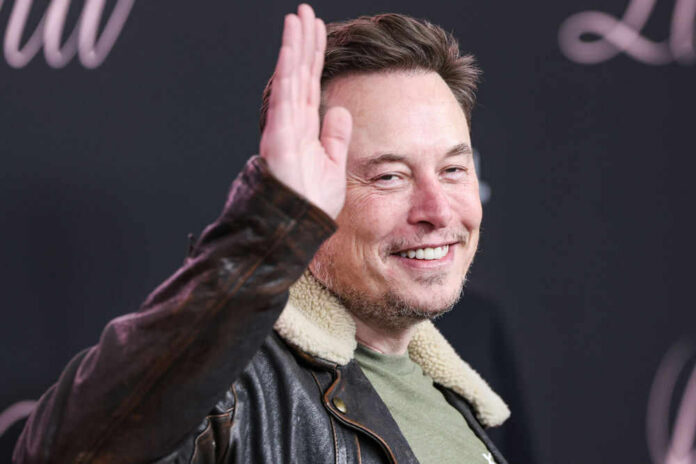
Tesla just told investors its car demand is rebounding—then immediately warned them to brace for a massive spending surge to bankroll robotaxis and humanoid robots.
Quick Take
- Tesla reported a Q1 2026 earnings beat, pairing higher revenue and EPS with signs of a North America demand rebound.
- Elon Musk emphasized AI and robotics as the next growth engine, but tempered expectations for how quickly robotaxis scale in 2026.
- Tesla raised 2026 capital spending guidance to about $25 billion, signaling an expensive buildout for AI compute, factories, and robotics.
- Robotaxi service has expanded within Texas, while Optimus development continues toward low-volume production targets discussed for summer 2026.
Earnings Beat Meets a Big Spending Warning
Tesla’s April 22 Q1 2026 report delivered the kind of headline numbers Wall Street likes: revenue of $22.38 billion and adjusted earnings per share of $0.41, both above expectations. Management also pointed to a rebound in North American demand after a tougher prior year for the core car business. But the same update that calmed “EV slowdown” fears also introduced a new one: rapidly rising capital needs.
Tesla’s guidance pushed investors to look past quarter-to-quarter deliveries and focus on what the company says comes next—robotaxis, humanoid robotics, and AI infrastructure. Musk and Tesla executives framed the next phase as a buildout story, with higher spending tied to autonomous-driving systems, training compute, and production capacity. For households still feeling inflation and high borrowing costs, the political subtext is familiar: big promises often come with big bills, and someone eventually pays.
Robotaxi Reality Check: Progress in Texas, Unanswered Metrics
Tesla highlighted ongoing work on Full Self-Driving and discussed robotaxi expansion in Texas, including reported moves into Dallas and Houston alongside prior operations. Investor questions have increasingly centered on real-world safety and unit economics—rides completed, revenue per mile, interventions, and incident rates—because those are the metrics that determine whether autonomy is a breakthrough business or an expensive science project. Public reporting on standardized performance metrics remains limited.
Musk also tried to manage expectations for 2026, signaling that even with expansion, robotaxi rollout won’t instantly flip Tesla into a cash machine. That caution matters because the policy environment around autonomy is fragmented: state-level rules, liability standards, and ongoing litigation risk create uncertainty. Conservatives who prefer clear, consistent rules for innovation may see this as another example of how regulatory patchworks can slow deployment and raise compliance costs without necessarily improving transparency.
Optimus and the High-Stakes Bet on Robotics
Tesla’s Optimus humanoid robot remains central to the company’s “more than an automaker” narrative. Updates around Optimus have included discussion of new hardware capabilities and a push toward low-volume production timelines discussed for summer 2026. Investors have treated Optimus as a potential long-term moonshot, but it is still pre-mass-production, meaning near-term financial results depend far more on vehicle margins, software uptake, and careful capital allocation than on robot revenue.
The broader significance goes beyond Tesla’s stock. Humanoid robotics, if it works, could reshape labor markets by automating tasks in warehouses, factories, and even some service roles. That sparks two political instincts at once: optimism about American industrial strength and concern about disruption for working families. Because details on production costs, deployment timelines, and customer demand are still emerging, the practical impact remains uncertain, and the most responsible takeaway is that the upside is hypothetical while the spending is real.
$25 Billion Capex: A Private-Sector Spending Surge With Public-Sector Echoes
The biggest concrete shift was Tesla’s capital spending guidance for 2026, raised to about $25 billion for AI and robotics-related investments tied to projects such as robotaxi, Optimus, and in-house compute. Some commentary has pointed to possible cross-company synergies with Musk-linked ventures, but the confirmed point is simpler: Tesla is choosing to plow far more cash into long-horizon projects. That can build durable advantage—or force painful tradeoffs if cash flow tightens.
This is where many voters’ frustrations with elite decision-making intersect with corporate America. Regular Americans have watched institutions—public and private—chase grand strategies while day-to-day affordability worsens. Tesla’s plan is not government spending, but it mirrors a familiar dynamic: ambitious spending today in exchange for promised benefits tomorrow, with limited near-term accountability beyond market reaction. Investors briefly pushed the stock up after the report, then reassessed as the cost picture sharpened.
What to Watch Next: Cash Flow, FSD Hardware Questions, and Transparency
Three pressure points now define the Tesla story into late 2026: free cash flow under heavier spending, the pace and safety of autonomy rollouts, and whether existing customers—especially owners with older FSD hardware—receive the support they expected. Investor discussions have highlighted concerns about whether some hardware generations can reach unsupervised autonomy. Tesla has not fully resolved those questions in public, and litigation risk remains part of the backdrop.
For conservatives and liberals alike who think the system too often rewards insiders over citizens, Tesla’s moment is a real-time case study in accountability. The company is making an enormous bet on AI-driven transportation and robotics. The country benefits if American innovation leads; the public loses if hype outruns results and trust erodes further. Until Tesla discloses clearer operational metrics on robotaxi performance and timelines, the smartest stance is cautious attention—not blind faith or reflexive hostility.
Sources:
Tesla Earnings Recap: Musk Braces Investors for Spending Increase
Tesla earnings preview: Robotaxi, FSD and Optimus take center stage
Longbridge — Tesla earnings-related coverage