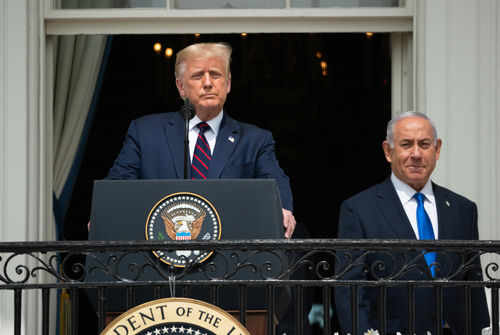
President Trump issued an unprecedented public prohibition against Israeli military operations in Lebanon, marking the most forceful U.S. restraint on its Middle Eastern ally in decades and testing the limits of a relationship conservatives once viewed as unshakeable.
Story Snapshot
- Trump publicly ordered Netanyahu to halt Lebanese bombings via Truth Social, declaring “enough is enough” despite ongoing Israeli drone strikes
- A fragile 10-day ceasefire brokered Thursday by Trump’s team collapsed as Israeli forces continued operations in southern Lebanon
- Lebanese President Aoun refuses direct talks with Netanyahu amid domestic opposition, derailing U.S. diplomatic efforts
- The directive represents Trump’s boldest pressure move yet on Israel, threatening to strain a key alliance while pursuing his claimed resolution of a “10th war”
Trump’s Public Ultimatum Breaks Diplomatic Norms
President Trump posted a stern directive on Truth Social Friday, explicitly prohibiting further Israeli bombings in Lebanon and warning that “enough is enough.” The message, addressed to Prime Minister Benjamin Netanyahu, threatened U.S. nuclear involvement if necessary and stated no financial exchanges would occur between the nations regarding the conflict. Trump committed to addressing Hezbollah separately through negotiations with Lebanon. This public prohibition marks an extraordinary departure from traditional U.S. diplomatic support for Israeli security operations, raising questions about whether Washington’s patience with its closest Middle East partner has finally run out.
Ceasefire Agreement Undermined by Continued Israeli Strikes
The Trump administration brokered a 10-day ceasefire starting Thursday at 5 p.m. ET following phone conversations between Trump, Netanyahu, and Lebanese President Joseph Aoun. Vice President JD Vance, Secretary of State Marco Rubio, and Joint Chiefs Chairman General Dan Caine were tasked with implementing the pause. Despite Netanyahu publicly agreeing to the temporary halt “at the request of my dear friend Trump,” Israeli military forces launched drone strikes in southern Lebanon within hours of the agreement. The contradiction between Netanyahu’s statement and his military’s actions suggests either a breakdown in Israeli command structure or a calculated decision to continue degrading Hezbollah while paying lip service to American demands.
Lebanon Rejects Direct Negotiations with Israel
Lebanese President Aoun thanked Trump for ceasefire efforts but refused to engage in direct talks with Netanyahu, citing overwhelming domestic political pressure against normalization without Israeli concessions. This rejection represents a significant setback to U.S. diplomatic efforts and highlights the practical obstacles facing Trump’s peace initiative. Israel and Lebanon have remained formally at war since 1948, with no direct leader-to-leader contact for over three decades. A rare Tuesday meeting in Washington between Lebanese Ambassador Nada Hamadeh Moawad and Israeli Ambassador Yechiel Leiter marked the first such diplomatic engagement in years, but failed to produce momentum for higher-level discussions.
Strategic Calculations Behind Israel’s Defiance
Israeli military officials justify continued operations as necessary to create conditions for Hezbollah’s eventual disarmament and establishment of a security buffer zone along Lebanon’s southern border. The strategy aims to degrade Iran-backed forces economically and militarily before any political settlement, making future agreements more realistic from Israel’s perspective. Netanyahu’s willingness to risk U.S. displeasure reflects confidence that American military aid and diplomatic cover will ultimately continue regardless of Trump’s public admonitions. The Iran dimension adds complexity, as the conflict imposes economic costs on Tehran while the Strait of Hormuz remains open under Iranian terms, stabilizing global oil markets but on conditions favorable to America’s adversary.
Trump Turns The Screws On Israel In Biggest Pressure Move To Reign In Bibi Yet https://t.co/6FrR29Q6pO
— zerohedge (@zerohedge) April 17, 2026
Concerns About Government Accountability and Elite Priorities
The contradiction between Trump’s forceful public statements and Israel’s continued operations raises troubling questions about whether traditional alliances serve American interests or simply perpetuate Middle East entanglements that cost taxpayer dollars and political capital. Many Americans across the political spectrum increasingly question why Washington continues funding foreign military operations while domestic infrastructure crumbles and economic insecurity spreads. The deployment of untested envoys like Jared Kushner alongside veteran officials suggests diplomatic improvisation rather than coherent strategy. Whether Trump’s approach represents genuine restraint on Israel or political theater designed to claim peacemaking credit while changing little on the ground remains uncertain, fueling cynicism about whether elected leaders prioritize solving problems or managing appearances.
Sources:
Why Israel is wearing down Iran ahead of potential Trump nuclear talks