
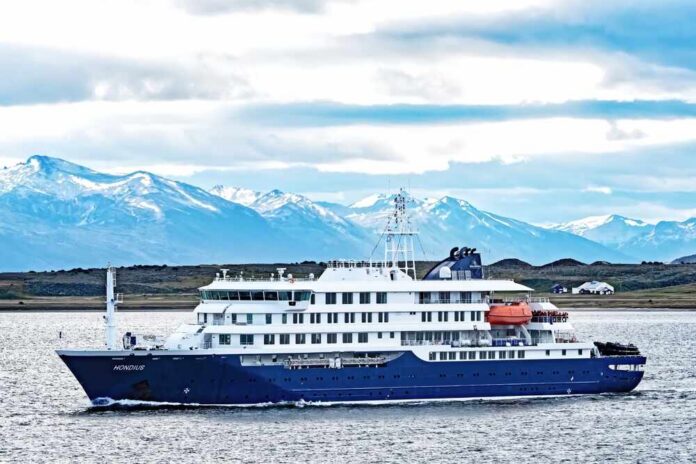
American citizens stranded on a quarantined cruise ship infected with a rare, deadly hantavirus are finally getting an evacuation flight home, but only after international ports refused entry and left them floating in uncertainty for days.
Story Snapshot
- US State Department organizing repatriation flight for approximately 17 Americans quarantined aboard the MV Hondius cruise ship
- Ship carries confirmed cases of rare Andes hantavirus strain capable of human-to-human transmission with 36% fatality rate
- Cape Verde denied docking rights, forcing vessel toward Spain’s Canary Islands amid local resistance
- Twelve countries now monitoring passengers who disembarked before outbreak detected, highlighting screening failures
- President Trump briefed on situation, administration claims outbreak “very much under control”
Federal Response After International Rejection
The State Department confirmed May 8 it is arranging a repatriation flight for Americans aboard the MV Hondius after the Dutch-flagged expedition vessel was denied port access in Cape Verde. Approximately 17 US citizens remain among 150 passengers and crew under quarantine as the ship travels toward Tenerife in Spain’s Canary Islands. Officials are coordinating with Spanish authorities and federal agencies to provide consular assistance upon docking, expected around May 10-11. The CDC has notified health departments in at least five states—Georgia, Texas, Virginia, Arizona, and California—to monitor roughly six known passengers who disembarked before the outbreak was identified, though all remain asymptomatic under 42-day surveillance protocols.
Rare Human-Transmissible Virus on Expedition Cruise
The outbreak involves the Andes strain of hantavirus, a South American variant that spreads through bodily fluids between humans, unlike typical rodent-borne strains. With a fatality rate around 36%, the Andes strain is rarely seen outside Chile and Argentina, making this the first known hantavirus cluster on a cruise ship. The MV Hondius departed Ushuaia, Argentina in early April on an expedition itinerary through Antarctica and the South Atlantic before cases emerged. A British passenger evacuated April 27 became the first confirmed case after developing symptoms. Oceanwide Expeditions, the ship’s operator, confirmed the diagnosis May 4. The vessel’s remote ports of call and expedition-style travel—common among adventure cruise enthusiasts—likely exposed passengers to rodent-contaminated areas or facilitated initial human transmission.
Multiple Evacuations and Medical Response
Three additional patients were airlifted from the ship May 7-8: a German passenger, a Dutch passenger, and a British crew member identified as the ship’s doctor. All three evacuees are reported stable, with the Dutch and British patients receiving treatment in the Netherlands and the German passenger returned home. Two infectious disease specialists from the Netherlands boarded the vessel to assist the remaining quarantined individuals. A Dutch woman who attempted to fly from Johannesburg tested positive May 5, prompting KLM to trace contacts on her flight. Authorities in at least 12 countries are now monitoring individuals who disembarked at Saint Helena and other stops before the outbreak was detected, exposing a critical gap in pre-symptomatic screening for expedition travelers visiting remote regions.
Official Assurances Amid Public Health Concerns
President Trump, briefed on the situation May 7, told reporters the outbreak is “very much under control” and promised a full report. CDC Acting Director Dr. Jay Bhattacharya emphasized federal coordination with international partners, while health officials in Arizona and the UK issued statements calling public risk “very low.” Oceanwide’s captain and medical staff maintain the ship remains safe, asserting infected individuals are no longer contagious. However, the 42-day incubation period and the virus’s ability to spread between humans without direct rodent contact underscore ongoing uncertainty. Spain’s Canary Islands government is preparing to receive the ship despite local resistance fueled by tourism concerns and memories of COVID-19 cruise outbreaks like the Diamond Princess in 2020, which infected over 700 passengers.
Implications for Travel and Government Accountability
The MV Hondius incident highlights failures that frustrate Americans across the political spectrum: inadequate screening protocols allowed infected passengers to scatter across continents before detection, leaving families anxious and governments scrambling. Expedition cruises, often costing over $10,000 per person, cater to affluent travelers seeking adventure in remote environments, yet this outbreak reveals industry vulnerabilities to exotic pathogens. The State Department’s repatriation effort, while necessary, raises questions about whether federal agencies prioritized timely intervention or reacted only after international partners refused responsibility. The episode tests post-COVID coordination mechanisms and may prompt stricter rodent control and human transmission screening for expedition operators, though enforcement remains uncertain. For everyday citizens watching loved ones stranded at sea, the response feels like another example of reactive governance rather than proactive protection.
Long-term, the outbreak could reshape expedition cruise standards and boost global hantavirus surveillance, but short-term disruptions—quarantines, medical evacuations, and potential insurance hikes—will burden passengers and the niche cruise sector. Authorities stress low risk to the general public, yet the virus’s 36% fatality rate and confirmed human transmission demand vigilance. As the ship approaches Tenerife, the focus shifts to whether Spanish officials will honor docking commitments or replicate Cape Verde’s rejection, further delaying Americans’ return home and exposing the fragility of international cooperation when crisis strikes.
Sources:
US plans evacuation flight for Americans on hantavirus ship – Khaleej Times
Hantavirus cruise ship MV Hondius: Passengers monitored in U.S., worldwide – CBS News