

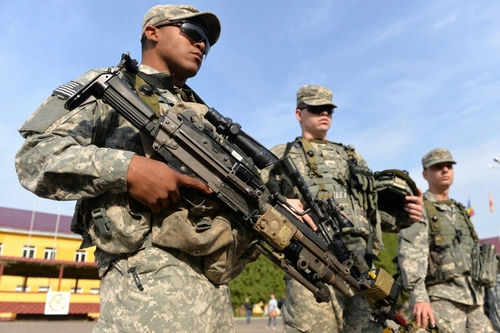
The biggest danger in the Iran war isn’t only Tehran’s missiles—it’s how fast “limited” airstrikes can slide into an open-ended ground fight without clear authorization or a clear end state.
Quick Take
- Operation Epic Fury began Feb. 28, 2026 as a U.S.-Israel air and naval campaign; public reporting confirms heavy strikes and retaliation, but not a confirmed Pentagon shift to ground operations.
- Trump and Defense Secretary Pete Hegseth have described major degradation of Iran’s capabilities, yet Iran still demonstrated reach by striking Prince Sultan Air Base on March 27 and injuring U.S. personnel.
- Energy and shipping risks remain central as threats to the Strait of Hormuz continue to pressure oil markets and household costs back home.
- MAGA voters are split: many support punishing the regime and defending allies, while others reject another Middle East escalation that contradicts “no new wars” expectations.
What Day 30 Really Shows: Air-and-Sea War, Not a Verified Ground Pivot
Publicly available timelines and overviews describe Operation Epic Fury as a U.S.-Israel campaign dominated by airstrikes and naval power since Feb. 28, including early “decapitation” strikes that reportedly killed Iran’s Supreme Leader Ali Khamenei. Those same sources do not confirm that the Pentagon is preparing ground operations as a new phase. That distinction matters because the political, legal, and human costs change dramatically once U.S. troops go ashore.
The most credible reporting in the provided research points to sustained aerial and maritime pressure: carriers positioned, long-range bombers staged to the UK, and ongoing strikes against missile and drone infrastructure. Defense Department messaging highlighted air dominance and the ability to sustain operations indefinitely, but that language can also be read as strategic signaling rather than evidence of imminent boots-on-the-ground plans. With limited verified detail, claims about a ground build-up remain unproven in the core sources provided.
“Neutralized” vs. “Still Hitting Us”: The War’s Contradictory Signals
Administration statements that Iran’s military had been “neutralized” were quickly tested by events on March 27, when Iran struck Prince Sultan Air Base and injured U.S. troops while damaging refueling aircraft. That sequence underscores a hard reality: degraded capabilities are not the same as eliminated capabilities, especially when an adversary retains missiles, drones, proxies, and asymmetric options. For voters demanding competence and clarity, mixed messaging fuels distrust and speculation.
Iran’s retaliation options extend beyond direct strikes. Proxy forces have been tied to regional attacks, and the broader conflict environment includes Lebanon and Iraq flashpoints that can quickly widen the battlefield. At the same time, civilian harm and infrastructure damage are being reported, including large casualty incidents that complicate war aims and postwar stability. Even supporters of tough action against Tehran often draw a line at mission creep that invites a prolonged occupation or nation-building.
The Real Pressure Point for Americans: Hormuz, Energy Costs, and the Home Front
For many conservative households, the kitchen-table consequences are immediate. Threats to the Strait of Hormuz and broader shipping disruption risk higher oil prices, higher diesel costs, and another inflationary pulse that punishes working families. The war also strains readiness and resources as naval deployments grow and air operations continue. In an election environment where voters expected border control and lower prices, an extended Middle East conflict can feel like a direct hit to domestic priorities.
MAGA’s Split Screen: Support Israel, Avoid Regime-Change Quagmires
The movement’s debate is not hard to understand. Some voters view Iran as a long-time sponsor of terrorism and see decisive force as overdue, especially after years of perceived weakness and globalist drift. Others remember Iraq and Afghanistan and reject any pathway that resembles regime-change war, particularly if Washington cannot define victory beyond “degrading” capabilities. The research provided includes calls to spare civilian infrastructure for rebuilding, reflecting concern about what comes after the bombing stops.
Constitutionally, the looming question is what authority and oversight will govern any escalation. A ground campaign would likely require clearer objectives, clearer timelines, and more transparent accountability to the American people than an air campaign can sometimes obscure. With the available sources not confirming ground preparations, the responsible takeaway is caution: treat “ground operation” chatter as unverified until supported by official, on-the-record details and independently corroborated reporting.
Until then, Day 30 suggests a grinding air-and-sea campaign with real battlefield consequences and real domestic costs. Conservatives who are tired of woke politics, uncontrolled borders, and spending sprees are also tired of wars that expand without a defined finish line. If the administration wants unity, it will need to pair strength abroad with constitutional clarity at home—and show the public how this ends without becoming another multi-year, multi-trillion-dollar commitment.
Sources:
https://eismena.com/en/article/war-us-israel-vs-iran-timeline-2026-2026-03-04