

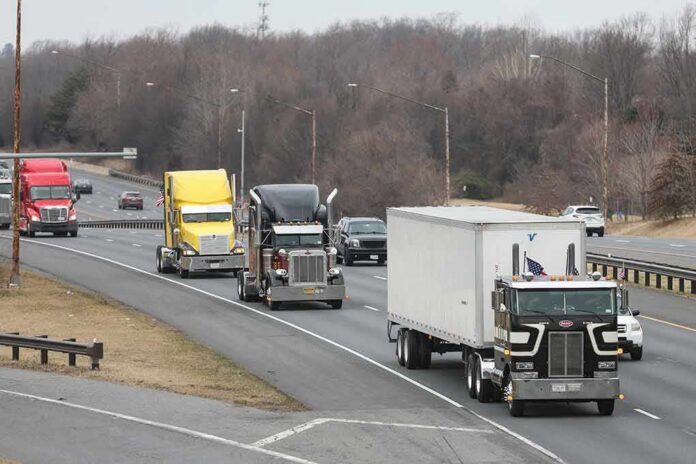
A nationwide “Freedom Haulers” push will move trained U.S. veterans into truck cabs while federal agencies clear unlicensed and non–English-proficient drivers from America’s highways.
Story Snapshot
- The Department of Transportation launched Freedom Haulers to recruit veterans into trucking.
- The campaign pairs veteran hiring with stricter license and English rules for commercial drivers.
- Recent military truck operators can fast-track parts of the commercial license process.
- Officials say the plan addresses safety and fills workforce gaps on critical freight routes.
Veteran Recruiting Campaign Led by Transportation Department
The United States Department of Transportation announced Freedom Haulers as a new interagency effort to bring more veterans into commercial trucking. Transportation Secretary Sean Duffy said the campaign will educate veterans about pay, benefits, and training pathways. The plan highlights a steady career that values discipline, safety, and mission focus. Agencies will coordinate outreach on bases and through veteran networks. The goal is to place more skilled Americans behind the wheel and strengthen supply chains that families rely on daily.
President Trump’s team framed the move as both workforce support and road safety. The White House and the Department of Transportation described a tight labor market for drivers that worsens delivery delays and raises costs. Recruiting veterans aims to fill those jobs fast with people who already handled large vehicles and strict checklists. The campaign also seeks to signal respect for service members by making civilian credentials simpler to earn and easier to fund with existing benefits.
License Rules, English Requirements, and Highway Safety Enforcement
Administration officials linked veteran recruiting with a crackdown on drivers who do not meet commercial standards. Federal and state partners are reviewing licenses tied to identity issues, improper training, or weak English skills. Authorities say commercial drivers must read road signs, follow orders at weigh stations, and respond during emergencies. Clearing unqualified drivers while adding trained veterans targets both sides of the safety equation: remove risks and add proven operators who value procedure and accountability on the road.
Enforcement actions focus on compliance, not nationality, but the administration stresses that immigration status does not excuse rule-breaking. Officials say strong standards protect every family that shares the road with a fully loaded rig. Supporters argue that when agencies tolerate weak screening, crashes and chaos rise. Tying hiring to higher standards makes the message clear: earn the license, speak English well enough to operate safely, and follow the law. Otherwise, you do not drive commercial freight in the United States.
Fast-Track Paths and Education Benefits for Service Members
New guidance promotes existing paths that help recent military drivers move faster into commercial roles. Veterans who recently drove heavy military vehicles can skip the standard skills test if they meet defined criteria. Service members still on active duty can start approved truck-driving courses during their last six months. The GI Bill can cover tuition and housing while they train. These steps shorten the wait for qualified drivers and help veterans land steady, good-paying jobs without needless red tape.
President Donald Trump announced a program to allow veterans to expedite a career in commercial trucking. Known as the Freedom Haulers program, the initiative would allow any US veterans who drove heavy equipment to be automatically eligible for a commercial trucking license.… pic.twitter.com/wStGQnx1ZQ
— Radar Online (@radar_online) July 30, 2026
Industry groups note that long-haul fleets need reliable people who can manage fatigue, weather, and tight delivery windows. Veterans often bring teamwork, safety culture, and calm under pressure. Those traits matter when hauling hazardous materials or navigating crowded cities. The administration argues that veterans will raise the bar in a field that touches every grocery aisle and job site. Faster placement also helps fight inflation pressure by keeping freight moving and controlling shipping costs passed to consumers.
What This Means for Drivers, Carriers, and Families
Carriers can expect more qualified applicants as outreach ramps up at bases and veteran service centers. States will see closer checks on commercial licenses, with the English rule and identity verification in sharper focus. For families, the promise is safer highways and steadier shelves. The Department of Transportation says the campaign will keep standards tight while clearing a path for those who already proved they can handle big machines and strict protocols under stress. Results will be measured as placements grow.
Balancing Safety Claims With Measurable Outcomes
Officials present the strategy as common sense: recruit proven drivers and enforce rules for everyone. The most immediate metrics will be veteran enrollments, license issuances, and carrier hiring. Hard safety outcomes, like reduced crash rates linked to noncompliant drivers, will take time to confirm. Until then, agencies point to clear inputs they control right now: training access, testing waivers for recent military operators, and targeted enforcement on licenses and English proficiency to protect the motoring public.
Sources:
foxnews.com, newsbeyonddetroit.net, apnews.com