
Somaliland is quietly offering Washington a strategic foothold to counter China and Iran in one of the world’s most critical maritime corridors — and Congress is starting to pay serious attention.
Story Highlights
- Somaliland sits near the Bab-el-Mandeb Strait, a chokepoint controlling access between the Red Sea and the Indian Ocean, making it a prime location to counter Chinese and Iranian influence.
- Senator Ted Cruz and Congressman Scott Perry have introduced separate legislation calling for U.S. recognition of Somaliland as an independent state.
- The Senate Foreign Relations Committee drafted the Somaliland Partnership Act, directing a feasibility study on a formal U.S. security partnership with the breakaway territory.
- Somaliland has offered the U.S. access to its Port of Berbera and critical minerals as part of its push for formal recognition and deeper ties.
A Strategic Prize in the Horn of Africa
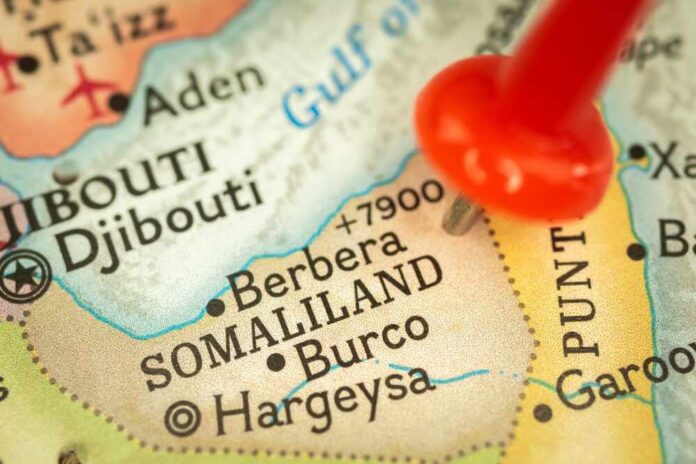
Somaliland, a self-governing territory that declared independence from Somalia in 1991, controls coastline along the Gulf of Aden near the Bab-el-Mandeb Strait — the narrow waterway through which roughly 12 percent of global trade passes. Its Port of Berbera has drawn significant international interest. The Senate Foreign Relations Committee’s draft Somaliland Partnership Act specifically identifies the port and the strait as assets that could protect U.S. and allied maritime interests, particularly against Iran-backed Houthi aggression and Chinese naval expansion in the region.
Senator Ted Cruz of Texas, chairman of the Senate Foreign Relations Subcommittee on Africa and Global Health, has issued stark warnings about Beijing’s efforts to gain a maritime foothold near Somaliland. Cruz has called for formal U.S. recognition, arguing the territory’s stable, democratically oriented government makes it a natural partner. The Heritage Foundation has echoed this view, noting that Somaliland’s political track record stands in sharp contrast to the instability that defines much of the broader region.
Legislation Pushing for Recognition
Congressional Republicans have introduced multiple bills to formalize the relationship. Senator Cruz has called on the administration to recognize Somaliland as an independent state, citing national security benefits. Congressman Scott Perry of Pennsylvania introduced the Republic of Somaliland Independence Act, which would grant formal recognition. Meanwhile, the Senate Foreign Relations Committee’s Somaliland Partnership Act takes a more cautious approach, directing a feasibility study on a security partnership without requiring full diplomatic recognition — a nod to the political complexities involved.
Somaliland has sweetened its pitch to Washington by offering access to its mineral resources alongside the strategic port. The territory’s minister of the presidency confirmed Somaliland is open to U.S. mineral partnerships as part of a broader push for recognition. For an administration focused on securing critical supply chains and reducing dependence on Chinese-controlled mineral markets, that offer carries real weight. The American Enterprise Institute has argued that ignoring Somaliland represents a significant blind spot in U.S. foreign policy that benefits America’s adversaries.
The Recognition Obstacle
Despite the compelling strategic case, the United States currently maintains no official diplomatic relations with Somaliland. Washington’s longstanding “One Somalia” policy recognizes Somalia’s territorial integrity, which includes Somaliland’s claimed territory. As of early 2026, only Israel formally recognizes Somaliland as a sovereign state among United Nations member nations. That diplomatic isolation limits how far any partnership can realistically go without a formal policy shift from the State Department or a congressional mandate forcing the issue.
The core tension is straightforward: Somaliland functions like a stable, cooperative state and is actively seeking to serve U.S. security interests, yet Washington’s bureaucratic inertia and deference to Somalia’s government have kept the relationship informal for decades. With China aggressively expanding its naval presence in the Indian Ocean and Iran funding Houthi attacks on Red Sea shipping, the cost of that inertia is rising. The Trump administration, which signaled interest in recognizing Somaliland during the transition period, has an opportunity to break from globalist diplomatic conventions and make a deal that serves American interests first.
Sources:
[1] Web – Somaliland Offers U.S. a ‘Partnership Against China and Iran’
[2] Web – There’s a rare opportunity to deepen US-Somaliland ties. But …
[4] Web – Sen. Cruz Calls for U.S. Recognition of Somaliland | Senator Ted Cruz
[5] Web – [PDF] A BILL – Senate Committee on Foreign Relations
[6] Web – Why the U.S. Should Recognize Somaliland
[7] Web – Congressman Scott Perry Introduces “Republic of Somaliland …
[8] YouTube – Ted Cruz issues stark warning over Beijing’s Somaliland threat
[9] Web – Ignoring Somaliland and South Yemen’s Case for Independence
[10] Web – Iran and Houthi terror proxy facing Red Sea threat from pro-US …
[11] Web – International recognition of Somaliland – Wikipedia
[12] Web – [PDF] Somaliland’s Recognition: Geopolitical, Strategic, and Legal …
[13] YouTube – Somaliland offers US access to minerals as it pushes for recognition