
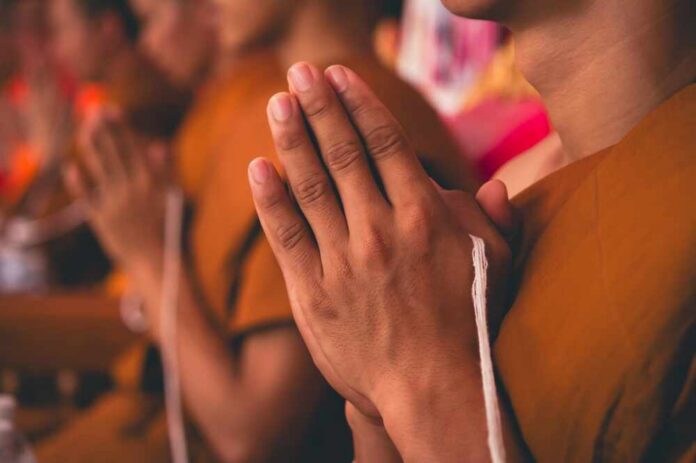
A Catholic bishop is now officially honored as a “great supporter” of Buddhism in Cambodia after helping fund a Buddhist statue and primary school that even bears his name.
Story Snapshot
- A Catholic bishop in Phnom Penh accepted a top Buddhist lay title for decades of cooperation.
- The honor follows his support for a Buddhist school named partly after him and a senior monk.
- Cambodian Buddhist leaders praise religious freedom and harmony while keeping Buddhism dominant.
- The case shows how tight church–state links in Southeast Asia can blur spiritual work and soft power.
Catholic Bishop Receives High Buddhist Honor
Bishop Olivier Schmitthaeusler, apostolic vicar of Phnom Penh and member of the Paris Foreign Missions Society, received one of Cambodia’s highest lay Buddhist titles on June 13, 2026. Buddhist leaders granted him the title “Akka Mahāupāsakabuddhasāsanūpatthambhakr,” which translates as “Elder Great Lay Supporter and Upholder of the Buddha’s Dispensation.” The event took place at Wat Botum Vatey, a major pagoda in the capital city, and was led by Supreme Patriarch Nun Nget of the Mohanikaya Buddhist order. Catholic and Buddhist leaders attended together, showing how closely tied religions and the state are in Cambodia.
This new honor builds on a 2022 recognition, when Buddhist leaders named Bishop Schmitthaeusler a “Maha Upasaka,” or “Great Lay Supporter,” for his help to Buddhist communities and for promoting dialogue. Reports say he has spent more than twenty years in Cambodia working on education, social projects, and outreach with monks and lay Buddhists. He has backed the construction of a large Buddha statue and supported teaching efforts at local pagodas. Supporters say this long-term work shows real personal commitment, not just a one-time photo opportunity.
A Buddhist School Bearing a Catholic Bishop’s Name
One of the clearest signs of this cooperation is a new Buddhist primary school called “Chomroen Olivier,” which blends the names of Supreme Patriarch Nun Nget Chomroeun and Bishop Schmitthaeusler. The school is attached to Wat Ang Montrey pagoda and teaches Pali and Sanskrit along with regular academic subjects. Buddhist leaders describe the school as a living symbol of dialogue and peace between religions. The bishop helped fund and support the project, linking Catholic missionary resources with Buddhist education goals in a country where Catholics are a tiny minority.
Cambodia is overwhelmingly Buddhist, and most citizens see strong ties between religion and the nation itself. In that setting, honoring a foreign Catholic bishop offers Buddhist and political leaders a way to show tolerance without losing control. Regional scholars note that such interfaith gestures are common in Southeast Asia and often work as soft power, calming social tensions while keeping the majority faith in charge. For conservatives watching from the United States, this looks less like religious pluralism as Americans know it and more like a managed partnership under a dominant state-backed faith.
Religious Freedom, Soft Power, and Conservative Concerns
During the ceremony, senior monks praised Cambodia’s religious freedom and the importance of harmony among faiths. Bishop Schmitthaeusler echoed that tone, saying the tribute “symbolizes long-term joint work” and that unity among religions can bring “true world peace.” These statements fit a broader Southeast Asian pattern where officials use religious dialogue to support national unity after past conflict. At the same time, the state’s favorite religion, Buddhism, keeps pride of place, with leaders shaping which minority voices receive attention and honors.
Secular outlets and some religious commentators point out that Catholics remain a very small minority in Cambodia, so such awards can also serve political messaging. They argue that lifting up one friendly Catholic bishop may help calm criticism from abroad while leaving most minority believers with little real leverage. Detailed public records about the funding, curriculum, and operations of the “Chomroen Olivier” school are not yet available, which leaves open questions about who truly directs the project and how much influence foreign donors hold.
What This Interfaith Honor Means for Americans
For American conservatives, this story highlights both promise and risk in interfaith work. On the positive side, a Catholic bishop is building real relationships in a tough mission field, using schools and social projects to serve local people and protect space for Christian witness. Cooperation with Buddhists has helped him gain trust, which is often vital where Christianity is small and sometimes viewed as foreign. That can protect believers from harassment and open doors for peaceful conversation instead of conflict.
However, the case also warns about how easily faith can blend with political agendas. When a government and majority religion decide which minority leaders are honored, they also decide which voices stay quiet. Without full transparency about funding and decision-making, honors like this can drift from pure spiritual cooperation toward image management and soft control. In the United States, where the constitution guards both religious liberty and limits on state power, this reminds readers why clear lines matter: faith should be free, not steered by government favors or pressure from dominant ideologies, whether “woke” at home or statist abroad.
Sources:
lifesitenews.com, ewtnnews.com, heraldmalaysia.com, fides.org, facebook.com, crvp.org