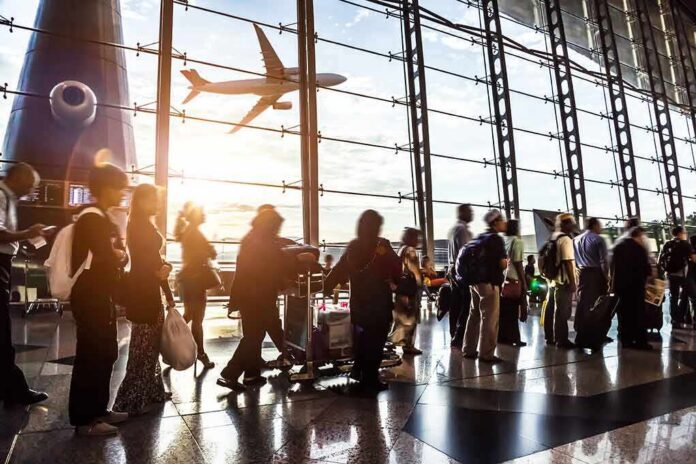
Iran-backed Houthis told airlines to avoid most Saudi airports and airspace after launching missiles and drones that shut down Riyadh’s main hub and left skies nearly empty.
Story Highlights
- Houthis warned all airlines to avoid Saudi airports and airspace, except Mecca and Medina.
- Riyadh’s King Khalid International Airport faced repeated strikes and an extended shutdown.
- Officials reported deadly casualties and more than 300 injuries from one terminal attack.
- Qatar Airways and Etihad altered flights as carriers reassessed safety in Saudi airspace.
Houthis Declare Saudi Airspace a Battlefield, With Two Holy Cities Exempt
Yemen’s Houthi group publicly warned airlines, workers, and travelers to avoid Saudi airports and airspace, saying they are “a theatre of operations,” while exempting the holy cities of Mecca and Medina. The message followed a burst of claimed attacks using ballistic and cruise missiles and drones. The stated carve-out for Mecca and Medina shows intent to spare specific religious sites, but it still labels civilian aviation targets across the country as fair game, raising grave safety and legal concerns.
Houthi military spokesman Yahya Saree claimed four “qualitative operations” within a day, signaling more strikes could come. Independent outlets reported multiple hits in quick succession, not a one-off event. That pattern tracks with the group’s stated goal: make Saudi skies unsafe. Even with the Mecca and Medina exception, the warning covered every other airport. For families, pilots, and crews, that means risk in takeoff, landing, and ground operations until defenses prove they can stop these threats.
Riyadh Airport Closures, Empty Skies, and Airline Disruptions
Saudi authorities extended the shutdown at King Khalid International Airport to complete safety checks and prepare damaged facilities. Reporters on the ground described near-empty skies as airlines canceled or rerouted flights. Qatar Airways paused service to Riyadh and Dammam, and Etihad canceled flights tied to Riyadh, Jeddah, and Dammam. These choices show how a terror playbook works: strike civilian aviation, frighten carriers, and impose real cost and confusion on travelers and businesses.
Officials attributed deaths and injuries to terminal strikes and damage on the ground, including one attack that killed 13 people and wounded more than 300. Reports also described a separate fatality of a Pakistani resident after another projectile hit a different terminal. Casualty tallies vary by outlet and incident, but the picture is clear enough: civilian targets and passengers faced lethal danger, and hospitals treated hundreds. Those facts underscore why many carriers shifted plans while authorities worked to secure the airport.
Legal Questions, Military Claims, and What Counts as a Target
International humanitarian law treats airports as civilian by default. An airport can only be a lawful target if it serves a specific and active military role and if attacking it offers a concrete military advantage. The public record here does not prove that standard was met. The Houthis framed airports as a broad operational space. That wording makes the strikes look like attacks on civilians. Saudi officials and partners called the actions crimes against civilian sites and vowed a serious response.
Saudi-led forces said they destroyed missile launch platforms and struck dozens of military targets after the airport attacks. Those moves show an effort to re-establish deterrence and protect air travel. But even strong counterstrikes do not undo the harm to ordinary people at terminals and on planes. For Americans watching from home, this is a reminder: rogue actors will target soft spots to gain leverage. That is why secure borders, strong missile defenses, and clear red lines matter for allies and for us.
Why This Matters to U.S. Readers and What Comes Next
Global air travel ties directly to our economy, energy markets, and the safety of Americans abroad. When a major hub like Riyadh goes dark, shipping routes and business trips shift, insurance costs rise, and fuel prices can jump. President Trump’s team must keep pressure on Iran’s network and back partners who defend civilian air lanes. Protecting families and lawful commerce from drone and missile terror serves national interests and basic common sense.
Airlines will keep weighing risk until defenses catch up and the threat ebbs. Investigators still need to pin down debris, confirm exact munitions, and reconcile different injury counts. But one truth stands out: broadcasting that civilian airports are fair targets is an assault on norms that keep travelers safe. America should back firm consequences for those who endanger passengers and crews, while supporting rapid repairs and proven protection for every airport that keeps the free world moving.
Sources:
townhall.com, dw.com, www3.nhk.or.jp, abc.net.au, bbc.co.uk, bbc.com