

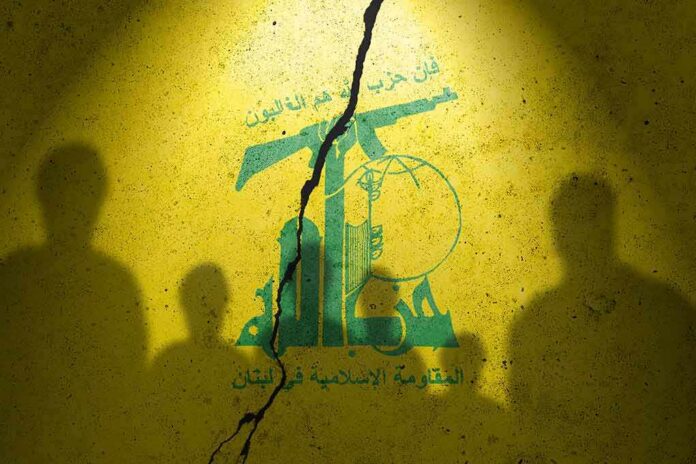
A new US-brokered plan is quietly turning parts of southern Lebanon into a test zone for disarming Hezbollah and reshaping Israel’s border security — with American military command right in the middle of it.
Story Snapshot
- The Lebanese army is taking over security in three southern “pilot zone” villages under a US-backed framework.
- The agreement says Lebanese forces must hold exclusive control, pushing out Hezbollah and all other non-state armed groups.
- US Central Command is coordinating the mechanics of the handover with both Israel and Lebanon, giving Washington direct leverage on the border.
- There is no fixed timetable for full Israeli withdrawal, and Israel vows to keep a deeper buffer zone as long as Hezbollah stays armed.
Lebanese Army Steps In As First Pilot Zones Launch
The United States State Department says the Lebanese army has begun assuming security duties in three southern villages named as “pilot zones” under a new border framework. These villages are Froun, Srifa, and Zawtar al-Gharbiya, all close to the tense frontier with Israel. Under the plan, Israeli forces are supposed to carry out a phased retreat from specific locations in southern Lebanon and then hand local security to Lebanese troops. The Lebanese military will be responsible for policing these areas and overseeing the removal of Hezbollah weapons and infrastructure, turning them into zones where only state forces operate.
Israel’s military confirms that the pilot program has started and describes the zones as safe areas tied to a broader ceasefire framework. This framework, brokered by Washington and agreed on June 26 after several rounds of negotiations, links three big steps: Hezbollah’s disarmament in the zones, Israeli withdrawal from occupied positions, and the deployment of Lebanese forces. Teams from the three militaries — Israel, Lebanon, and the United States — are now coordinating and planning how to carry out the agreement on the ground. Israel has warned it will respond forcefully to any violation in or around these pilot areas, underscoring how fragile the situation remains.
Exclusive Control Clause Targets Hezbollah And Other Militias
The joint statement from earlier Washington talks spells out that Lebanese army units are meant to exercise exclusive control in the pilot zones, keeping out all non-state armed groups. In plain terms, that means no Hezbollah fighters, no militia checkpoints, and no private arsenals inside these trial areas if the framework is followed. The deal would see the Lebanese Armed Forces take over security in places Israel vacates, then prove that the zones have been cleared of Hezbollah weapons and infrastructure before further steps are taken. This design turns the Lebanese army into the central gatekeeper for any future Israeli move back from the border, making its performance in these small areas a high-stakes test.
Lebanese Prime Minister Nawaf Salam has framed the deployment as a first phase toward a broader Israeli pullback, saying the army’s presence in pilot zones brings the country closer to full withdrawal without giving up that long-term goal. The Lebanese army itself stresses that it already carries out missions in parts of the south and presents its role in Froun and Srifa as a continuation of existing patrols, not a brand-new arrival. At the same time, the army is working with the Military Coordination Group for Lebanon to begin deployment in Zawtar al-Gharbiya once Israeli forces withdraw from that village. For residents who have lived under the shadow of Hezbollah and repeated Israeli strikes, the promise of clear state control is important, but trust remains fragile after years of conflict.
US Central Command Drives The Mechanics, While Timelines Stay Open
The framework’s move from talk to action began with a United States military delegation visiting Beirut on July 11 to meet the Lebanese army command. Lebanese officials say these meetings focused on the mechanics for implementing the first pilot zone, with the goal of allowing Lebanese forces to deploy once Israeli units leave. A United States official describes this as the “implementation stage,” noting that the first pilot zone would launch within days and that more zones are already being mapped. United States Central Command is tasked with coordinating the zones with both countries, serving as the practical bridge between the Israeli and Lebanese militaries and giving Washington a direct hand in every step.
The Lebanese army began assuming security responsibilities in three southern villages on Monday under a US-backed pilot initiative, the State Department said. https://t.co/7oiqRpBUgv
— Gary Buckley™ (@myrddenbuckley) July 21, 2026
This structure gives the United States strong influence over what happens along Israel’s northern border, but it also means key decisions can be delayed when security arguments arise. The June 26 framework does not set a fixed timetable for full Israeli withdrawal from southern Lebanon, making every pullback conditional. Hezbollah has openly rejected the deal, insisting on its own terms and refusing to commit to leaving or disarming in the south, which keeps tensions high. Israeli leaders say they will keep a deeper security zone, about ten kilometers inside Lebanon, for as long as Hezbollah remains armed, turning the pilot zones into a narrow experiment rather than a guarantee of wider peace.
First Test Of A Fragile Ceasefire With Big Regional Stakes
Reporters describe the pilot zones as the first real test of the ceasefire framework on the ground, and of the Lebanese army’s ability to push out a powerful militia while avoiding fresh clashes. The plan mirrors earlier attempts in other regions where state forces were supposed to replace non-state groups under outside pressure, but those past experiments often left militias with strong informal control. Here, the success of three small villages could decide whether the model expands across more of southern Lebanon, or stalls under mistrust and new violence. For American conservatives, this matters because United States troops and commanders are once again deeply involved in Middle East border deals while Iran-backed Hezbollah still holds significant firepower.
Local residents in southern Lebanon are reported as wary, saying they fear renewed strikes and doubt Israel’s intentions even as they wish to return to normal life. Israeli officials, for their part, call the zones a way to test whether the Lebanese army is really willing and able to remove Hezbollah’s weapons, making future withdrawal depend on strict security checks. That means any failure, delay, or violation could be used to justify keeping Israeli forces in place and extending the buffer zone, even while Washington talks up progress. The coming weeks in Froun, Srifa, and Zawtar al-Gharbiya will show whether this tightly managed experiment can reduce the risk of war on Israel’s northern border or simply freeze a tense standoff under American oversight.
Sources:
insiderpaper.com, straitstimes.com, thenationalnews.com, english.aawsat.com, middleeasteye.net, aa.com.tr