

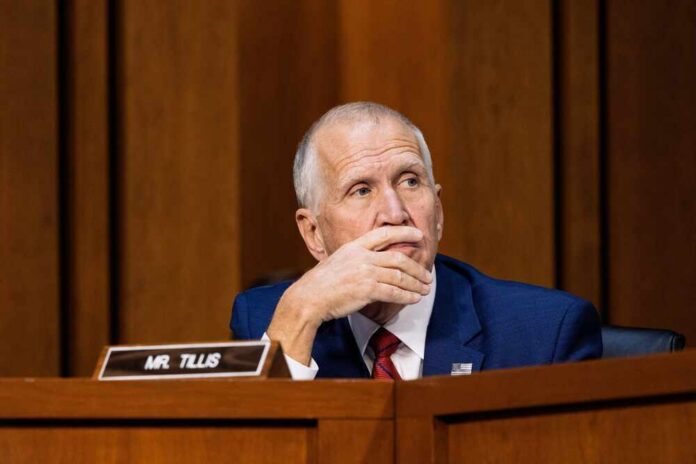
Republican Senator Thom Tillis has said he will not back Todd Blanche for attorney general unless Blanche meets with Epstein survivors.
Quick Take
- Tillis tied his support to a face-to-face meeting with survivors.
- Blanche said he was not allowed to meet directly with them.
- Survivors have already come out against the nomination.
- The fight has turned a confirmation vote into a test of accountability.
Tillis Draws a Line on Survivor Access
Tillis made the meeting demand before Blanche’s Senate Judiciary Committee hearing, and the issue quickly became a flash point in the nomination fight. Reporting says Tillis would not support Blanche unless the nominee met with Epstein survivors, putting victim access at the center of a major Justice Department confirmation battle. For readers who want less talk and more accountability, the demand reflects a simple point: people harmed by Epstein’s crimes should be heard before the Senate hands Blanche more power.
That position also gave survivors a clear voice in the debate. A group of Epstein survivors publicly announced opposition to Blanche’s nomination, which confirmed that the meeting demand was not a symbolic gesture or a political stunt. Their objection matters because the Senate is not just voting on a legal technician. It is deciding whether a nominee tied to a painful and still-open abuse case has earned trust from the people most directly affected.
Blanche Faces Questions Over the Refusal
During the July 15 hearing, Blanche did not commit to meeting the survivors personally. He said he was prohibited from meeting them directly and offered to have a Justice Department human trafficking expert meet with them instead. Blanche also acknowledged mistakes in the rushed release of Epstein-related files and said he felt sorrow for survivors, though he did not give a direct apology. That leaves a gap between sympathy and action, which is often where Washington loses public trust.
The exchange gave Blanche a chance to settle the matter cleanly, but he stopped short of that. Senate testimony and related reporting show that Democrats pressed him on the point, while Blanche kept leaning on legal limits rather than making a personal commitment. The result is a familiar problem in Washington: officials speak about victims in soft tones, then avoid the direct contact that would show real respect. For many conservatives, that looks like process taking priority over decency.
Confirmation Politics and the Conservative Angle
The Blanche fight sits inside a broader Senate pattern where victim demands can shape high-stakes Justice Department nominations. In this case, the issue is even sharper because the nominee is tied to a politically charged administration and to a case that has stirred deep public anger. Republicans also have their own internal pressure here. Reporting says some GOP senators defended Blanche, which reduces the leverage on Tillis and makes the outcome harder to read.
🚨 Senate Judiciary: Sen. Thom Tillis says he will not support AG nominee Todd Blanche in committee unless Blanche meets with Jeffrey Epstein’s survivors and their attorneys.
Democrats expected to oppose the nomination, Tillis’ position could be decisive in whether Blanche… pic.twitter.com/Kktxf77AcT
— Congress Scope (@CongressScope) July 16, 2026
Still, the core issue remains plain. Tillis set a condition, survivors backed the demand, and Blanche did not answer it with a personal promise. That leaves the nomination in a cloud of uncertainty and puts the Senate on record about whether survivor access matters or whether official sympathy is enough. For voters who want a government that takes abuse seriously and does not hide behind bureaucracy, this fight is about more than one nominee. It is about whether the process still makes room for accountability.