

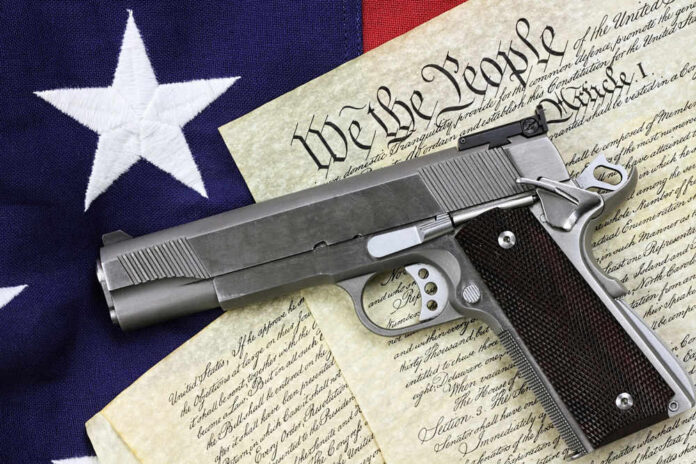
On the very day America celebrates hard-won liberty, national advocacy groups pressed lawmakers to tighten gun laws that the Supreme Court says protect an individual right.
Story Highlights
- Advocacy groups again used Independence Day to push new gun restrictions, echoing past July 4 campaigns.
- The Supreme Court recognized an individual right to keep and bear arms in Heller and applied it to the states in McDonald.
- Supporters of stricter laws cite “reasonable regulation,” while recent Court rulings raised the bar for new limits.
- The American Civil Liberties Union supports regulations tied to public safety, signaling ongoing legal battles ahead.
Independence Day Push Revives Old Battle Lines
Advocacy groups marked July 4 with renewed calls for tighter gun laws, continuing a pattern seen for years. Past Independence Day efforts promoted universal background checks and limits on semi-automatic rifles, using parades and outreach to press their case. This year’s messaging tracks that same playbook. The timing frames regulation as patriotic duty. Opponents answer that freedom, not control, is the point of the holiday. The divide remains stark, and the audience is the same: Congress, governors, and local officials.
Groups tied their appeals to “public safety,” citing long-standing claims that more rules would cut violence. Some legal commentators also argue the Constitution allows reasonable limits that do not disarm the people. The American Civil Liberties Union backs regulation when it links to health and safety goals, calling for deference to lawmakers in some cases. But those broad themes meet a changed legal map. Recent high court rulings demand firm historical support before governments can add new gun limits.
What The Supreme Court Actually Said
In 2008, the Supreme Court held that the Second Amendment protects an individual right to keep and bear arms for lawful purposes, like self-defense in the home. That ruling, District of Columbia v. Heller, struck down a handgun ban and a trigger-lock mandate. Two years later, the Court said that right binds states and cities as well, through the Fourteenth Amendment in McDonald v. City of Chicago. Together, those cases set a national baseline. Governments must respect an individual right, not only a collective militia model.
In 2022, the Court refined how judges review gun laws. The test looks to our nation’s historical tradition to decide if a modern restriction fits with the Founders’ era. That approach has already forced lower courts to revisit many rules, from public carry to weapon bans. Supporters of regulation still point to language in Heller noting that some limits can be “presumptively lawful,” but the history test now drives outcomes. New limits must match grounded analogues, not vague appeals to safety.
The “Reasonable Regulation” Claim Meets Today’s Standard
Gun-control advocates argue that the Second Amendment coexists with strict safety laws. They cite post-Heller cases upholding bans on certain rifles and magazines, red flag rules, and storage mandates. They also say federal action can reduce violence and that mass shootings are not inevitable with the right policies. But those arguments face tougher scrutiny after the history-centered test. Courts now ask whether similar limits existed at the founding, not whether lawmakers think a policy is wise today.
The American Civil Liberties Union position highlights the clash. It favors government limits that tie to health and safety, urging courts to credit legislative judgments. That view conflicts with the Supreme Court’s current demand for historical grounding. Lawmakers can still act, but they must show analogues from the early republic or Reconstruction. That burden is high for broad modern bans. Voters may hear smooth slogans. Judges will ask for records, dates, and close fits to our legal past.
Why The July 4 Messaging Matters To Your Rights
Independence Day pushes shape public opinion. Marches, op-eds, and friendly news hits can soften voters for new bills. Past July 4 events by groups like Moms Demand Action showed how coordinated campaigns seed ideas that later become proposals at city halls and statehouses. When people relax with family and flags, activists pitch more rules as “freedom from fear.” That framing competes with a simple truth from the Court: the right is individual, and it limits what government can do.
For gun owners, the takeaway is clear. Respectful debate is welcome, but rights are not seasonal. Politicians may try to rush votes after a holiday blitz. Ask them to show the history that the Supreme Court now requires. Demand that any change targets criminals, not the neighbor who follows the law. Stand firm on the Constitution. Teach your kids what it says. Freedom stays free when citizens read it, know it, and insist that leaders honor it in full.
Sources:
townhall.com, britannica.com, constitutioncenter.org, giffords.org, youtube.com, pmc.ncbi.nlm.nih.gov, shontelbrown.house.gov