

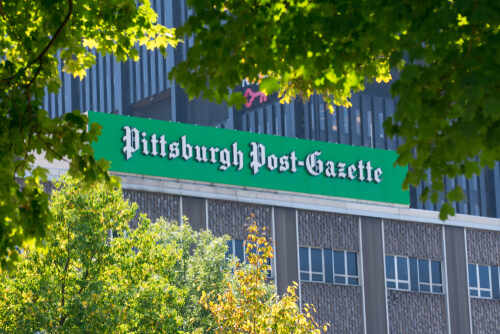
A nonprofit takeover of Pittsburgh’s historic Post-Gazette newspaper has resulted in mass layoffs targeting up to half the newsroom staff, with union leaders alleging deliberate retaliation against workers who participated in a recent strike.
Story Snapshot
- The Venetoulis Institute for Local Journalism slashed one-third to half of Post-Gazette newsroom positions immediately after assuming ownership from Block Communications Inc.
- Union officials claim 80% of strike participants were not retained, characterizing the cuts as discriminatory union-busting rather than necessary restructuring.
- New owners defend the layoffs as essential to building a financially sustainable newsroom under a nonprofit model, actively hiring replacements including some former staff.
- Pittsburgh readers face reduced coverage across all departments as the historic newspaper transitions under significantly diminished reporting capacity.
Nonprofit Takeover Triggers Immediate Job Cuts
The Pittsburgh Post-Gazette began sweeping newsroom layoffs Thursday night as the Venetoulis Institute for Local Journalism assumed control from Block Communications Inc. The Newspaper Guild of Pittsburgh reported at least one-third of newsroom employees lost their jobs, with expectations climbing to half by Monday. Every department suffered cuts, including reporting, editing, production, arts, sports, photography, and copy editing. The transition represents an asset purchase requiring the new nonprofit owners to rebuild the entire operation from scratch, sidelining existing union contracts and employment agreements.
Union Alleges Discriminatory Targeting of Strikers
Union President Andrew Goldstein characterized the layoffs as a “brazen, discriminatory attempt at busting our union,” pointing to data showing 80% of recent strike participants were not offered positions under new ownership. Approximately half of total staff received employment offers while the remainder received nothing, according to multiple reports. The guild expressed no confidence that remaining staff could adequately serve Pittsburgh’s journalism needs given the scope of reductions. This pattern raises fundamental questions about whether workers exercising their labor rights face institutional punishment when ownership changes hands, a concern that transcends traditional political divides.
New Owners Frame Cuts as Financial Necessity
Stewart Bainum Jr. and Bob Cohn, leading the Venetoulis Institute acquisition, defended the restructuring as essential for long-term viability. Cohn stated the organization is “working hard for long-term success” and actively hiring, including some laid-off employees. The owners emphasized their commitment to rebuilding a sustainable newsroom capable of serving Pittsburgh’s community journalism needs for decades. The nonprofit model mirrors an industry-wide trend as financially struggling newspapers seek alternative ownership structures to avoid complete closure, though the aggressive staffing reductions suggest sustainability may come at significant cost to comprehensive local coverage.
Financial Pressures Drive Industry Transformation
The Post-Gazette faced years of financial deterioration and labor disputes under Block Communications Inc., culminating in a recent strike and imminent shutdown risk before the nonprofit intervention. Block sought an exit from an unprofitable asset while the Venetoulis Institute saw an opportunity to preserve Pittsburgh journalism through restructuring. This transaction follows broader newspaper industry patterns where nonprofit conversions offer lifelines to failing operations, though typically accompanied by substantial staff reductions. The outcome reveals a troubling reality: even rescue missions for local journalism increasingly demand workforce sacrifices that may undermine the very reporting capacity these interventions aim to preserve.
Community Impact and Uncertain Future
Pittsburgh readers now face diminished coverage across specialized beats as the drastically smaller newsroom attempts to maintain operations. The job losses ripple through Pittsburgh’s media sector while potentially creating gaps in local accountability reporting that serves all residents regardless of political affiliation. Short-term disruptions appear certain, while long-term sustainability under the nonprofit model remains unproven. The transition illustrates a fundamental tension in modern journalism: financial viability increasingly conflicts with comprehensive community coverage. Whether the new ownership can balance fiscal responsibility with journalistic duty will determine if this represents genuine preservation or managed decline of a historic institution.
Sources:
Post-Gazette layoffs begin as new ownership takes control – Editor & Publisher
Post-Gazette cuts begin as nonprofit prepares to take over – NewzCity