

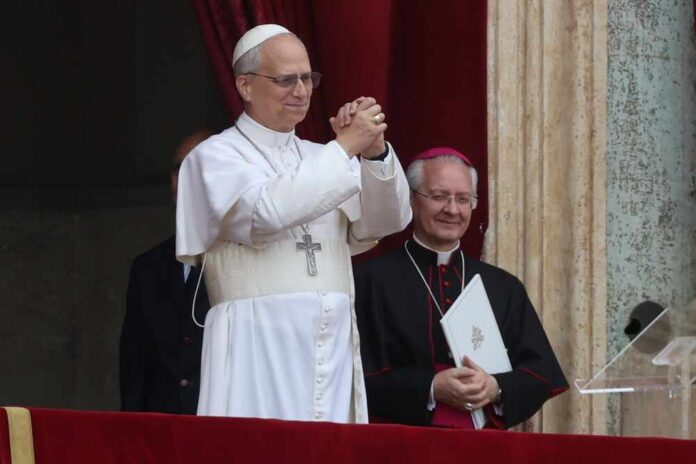
Pope Leo’s choice for a key German diocese is now openly weighing whether priestly celibacy should be relaxed, putting a core Catholic tradition under fresh pressure.
Story Snapshot
- A new German bishop, backed by Pope Leo, calls celibacy a “question” with many possible models.
- He has supported the German Synodal Way, which asks Rome to open the door to married priests.
- Priestly celibacy is long affirmed by popes as a gift and a powerful witness, not a disposable rule.
- The push from Germany fits a wider pattern of regional campaigns to chip away at universal Church discipline.
Pope Leo’s German Pick Opens the Door on Celibacy
Pope Leo XIV has appointed German priest and canon lawyer Christian Würtz as bishop of the Diocese of Eichstätt in Bavaria, replacing Bishop Gregor Maria Hanke. German and Catholic outlets note that Würtz is not a quiet caretaker; he is known for his support of the controversial German Synodal Way and its reform agenda. That agenda includes rethinking priestly celibacy in the Latin Church and exploring options for married clergy under certain conditions. For faithful Catholics, this matters because a bishop is not just a manager. He sets the tone on doctrine, discipline, and how deeply a local church stays rooted in tradition.
In recent interviews, Bishop Würtz has avoided a clear yes-or-no answer on whether the Church should relax mandatory celibacy, but he has called the issue a “fascinating question” and said there are “different models” to consider. He has stressed that the Church must weigh “very carefully” what it would give up and what it might gain if it loosened the obligation. German reporting explains that he can imagine a relaxation of the celibacy rule and that he shares this view with other German bishops, such as Archbishop Stephan Burger, who considers such a change “conceivable.” This is more than an abstract debate. Coming from a sitting bishop who now leads his own diocese, these words signal real openness to structural change.
German Synodal Pressure vs. Longstanding Church Discipline
The German Synodal Way has become famous, and in many circles notorious, for pushing changes on sexual ethics, blessings of same-sex unions, women’s ordination, and the discipline of priestly celibacy. Bishop Würtz voted in favor of Synodal texts that ask Rome to reassess celibacy and consider ordaining certain married men, especially permanent deacons respected in their communities. One implementation document bluntly urges the pope to examine whether already ordained priests could be released from celibacy while remaining in ministry, something that would mark a major departure from current practice. His predecessor, Bishop Hanke, opposed these measures, underscoring the sharp divide between reform-minded German bishops and those committed to the existing discipline.
These calls from Germany fit a broader pattern seen since the Second Vatican Council. Regional groups of bishops periodically pressure Rome to soften celibacy rules, usually citing priest shortages or cultural realities. Recent flashpoints include the 2019 Amazon Synod, where some bishops wanted married men ordained for remote regions. Today, German bishops frame celibacy as a changeable discipline, not a doctrine, and argue that optional celibacy could help pastoral outreach and ease staffing problems. But the Latin Church’s law has been repeatedly reaffirmed by councils and popes, who insist that, while the rule is technically changeable, the Church has compelling spiritual reasons to keep it. That tension is now on display again through Würtz’s appointment and public comments.
What the Church Teaches About Celibacy’s Value
The Catholic tradition in the Latin rite treats priestly celibacy as a freely chosen gift that ties the priest’s whole life to Christ and the Church. Saint Paul VI’s encyclical on celibacy states that the current law “should today continue to be firmly linked” to priestly ministry and describes celibacy as supporting a priest’s “exclusive, definitive and total” love for Christ. Modern teaching stresses that celibacy is not a random rule but a sign of the coming kingdom of God and a witness of undivided love for God and His people. Church documents warn that if celibacy is only seen as a legal burden, its deep spiritual meaning is lost. For many Catholics, especially conservatives, this discipline protects the integrity and focus of the priesthood and distinguishes it from ordinary career paths.
At the same time, official teaching admits that celibacy is a discipline, not an unchangeable dogma, and there are narrow exceptions. Eastern Catholic churches can ordain married men, and some married ministers from other Christian communities may become Catholic priests when they enter full communion. Even so, popes in the modern era, including Paul VI, John Paul II, and now Leo XIV, have repeatedly reaffirmed the Latin Church’s commitment to a celibate priesthood and have urged bishops to teach its value clearly. That makes the German push to “open” celibacy a serious challenge, not a routine administrative tweak. While Würtz speaks about “careful weighing,” his support for Synodal texts that seek optional celibacy raises questions about how firmly German leadership stands by long-standing discipline.
Sources:
lifesitenews.com, zeit.de, catholicculture.org, cathcon.blogspot.com, wsj.com, insidethevatican.com, clericalwhispers.blogspot.com, ncronline.org, youtube.com