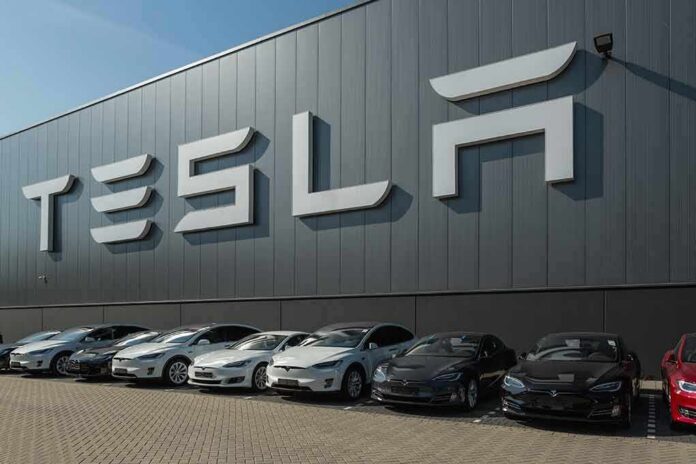
Tesla’s third-quarter deliveries crushed Wall Street forecasts, lifting shares and signaling a rebound without federal tax crutches.
Story Highlights
- Tesla delivered 486,532 vehicles in Q3 2026, topping analyst estimates by tens of thousands.
- Production totaled 464,391 vehicles as the company balanced output and inventory.
- Shares jumped after the beat, even as deliveries were about 2% lower than last year’s record quarter.
- Analyst “consensus” varied, but Tesla’s result cleared the common estimate ranges decisively.
Deliveries Beat Expectations Amid Mixed Year-Over-Year Comparison
Tesla reported 486,532 deliveries for the July through September period, beating widely cited estimates and sparking a rally in the stock. Tesla said it produced 464,391 vehicles in the quarter, showing steady output despite tight pricing and intense competition. The delivery total finished about 2% below the record quarter one year ago, when a rush to capture credits lifted demand, but it still topped forecasts by a wide margin based on tracked estimates.
Major outlets and market data providers pointed to consensus estimates in the mid- to high-400,000 range, which Tesla cleared comfortably. A company-compiled snapshot showed expectations near 461,974, underscoring how far the actual result came in above the average view for the quarter. The delivery beat came as investors looked for signs that demand and logistics were normalizing after a choppy first half. The stock moved higher on the news as traders reassessed growth momentum.
Production, Deliveries, And Energy Storage Show Operational Execution
Tesla’s production of 464,391 vehicles lined up with the firm’s delivery success, suggesting improved matching of builds to orders and regional timing. The company also reported 13.7 gigawatt-hours of energy storage deployments, highlighting a growing business that helps balance the grid and back up homes and industry. That line is becoming a second pillar for cash flow and growth. While the auto side faces price pressure, storage deployments add diversification and scale for the company’s overall results.
Quarter-to-quarter comparisons remained mixed. Deliveries rose versus the prior quarter but were lower than a year ago, when incentives pulled forward sales. Analysts acknowledged that the same number can tell two stories at once: a strong beat against consensus and a modest decline against last year’s peak. For most shareholders, the consensus beat mattered more in the moment, since it resets expectations heading into the company’s financial update later this month.
What The Estimate Spread Means For Investors And Consumers
Analyst estimates differed this quarter, which shaped how “beat” headlines were framed. Tesla’s own tally of outside forecasts showed expectations at 461,974, while other services highlighted similar figures. That spread is normal across Wall Street coverage and matters because it sets the baseline for surprise. The bigger the gap between the estimate and the result, the stronger the signal about demand, pricing, and execution going into year-end and into next year’s planning cycle.
For car buyers, higher deliveries point to better availability, shorter waits, and continued incentives in some trims as the company seeks volume. For workers and suppliers, the production stability suggests steadier schedules and clearer inventory planning. For investors, the delivery beat offers a cleaner setup for the next earnings call, where margins, energy storage expansion, and updated guidance will draw focus. One quarter does not make a year, but this one shifted the tone back toward growth.
Sources:
insiderpaper.com, reuters.com, finance.yahoo.com